Thread #16937450

File: Monty_open_door_chances.svg_-1-9143996[1].png (9.1 KB)

9.1 KB PNG
Monty Hall doesn't make any sense and we've all been coerced to go along with it
>uh but actually it's demonstrable that your odds increase from 1/3 to 2/3 if you swap doors
No!
You're exchanging one chance for another, it's 50/50 regardless. The system is broken and everyone's too afraid to point it out because the consequences are dire
251 RepliesView Thread
 Showing all 251 replies.
>>
>>
>>16937450
>ou're exchanging one chance for another, it's 50/50 regardless.
Sure, but this is a public site. So the try to rot your brain anyhow. Evolution, BigBang, Relativity, Flatearth, MoonHoax, etc etc are in that line. Nearly everything that promotes here is a lie, truth is ignored, banned or pruned/deleted.
>>
>>
>>16937470
>Run a simulation a few dozen times and see for yourself.
OK sure
I encounter two doors with no prior context
One door is right, one door is wrong
Someone has randomly pre-selected a door for me
A simulation demonstrates it's always a 50% chance, whether I stick with the pre-selected door, or change my choice
>>
>>
>>16937450
>>16937479
problem with nibbas like you is you never read the problem properly, the question monty hall asks is "whether you should switch?".
now here is the solution, given 3 doors, how likely is it for you to choose the correct one? 1/3 right? so basically 2/3 times you will choose the wrong one, so if someone asks you would you like to switch, what would you do? will you switch or not? when it is obvious that it is more likely that you have chosen the wrong door.
>>
File: montehall.jpg (270.5 KB)

270.5 KB JPG
>>16937450
>>
>>16937536
Perhaps the biggest "catch" of the Monte Hall problem is that the door that the host reveals is always the same door: the one that both the contestant hasn't chosen and doesn't contain the prize, which can only be one door. This revelation decreases the chances that your original choice is the right door accordingly.
>>
>>
>>16937517
add this fact to the scenario in the monty hall problem and this >>16937544 follows.
>>
>>
>>16937548
nibba did you even understand what I
am saying? do you understand probability?
1. It is more likely that you chose the wrong door, 2/3 chance the winning door is among the remaining ones.
2. Host reveals a losing door from among the remaining ones
3. that 2/3rd probability has now transfered to just a single door
what you choose initially is just a matter of chance, it is obviously possible for you to choose the winning door initially, we are talking about probability here, switching doesn't guarantee you will win, just makes it more likely.
the question here is should you switch? based on chances the answer is yes.
>>
>>
>>16937470
>>16937480
Does your simulated month always remove a goat every time or are you a disingenuous faggot like the others who mention a sim?
If you always remove a door which always has a goat, it's 50/50
The third door never existed as a valid possible choice
>>
>>
In fact, you don't even need the experiment, because you should be able to figure out how often you're going to land on the right door out of 3 at random without having to roll any dice. That's your chance of winning without switching, regardless of what Monty does.
>>
>>
>>
>>
>>16937574
Idiotic codebrain:
>>16937564
>>
File: 1642932582293.png (72.9 KB)

72.9 KB PNG
>>16937450
>>16937479
>>16937548
>>16937562
>>16937570
For anyone who's still confused by this problem, here's a simple explanation.
First, we will state the problem setup in clear terms. Then, we will make two observations. The conclusion from our observations will be left for the reader to make.
The setup:
You are on a game show, and there are three closed doors before you. Behind one of the doors is a prize, and behind the other two doors are two goats. The host of the game show knows what's behind each door, but you do not.
To begin the game, the host asks you to choose whichever door you believe the prize is behind. After you've made your choice, the host opens one of the doors you did not choose and reveals a goat. Then, the host asks you if you would like to switch your choice to the third door.
Note: The host always opens a door with a goat, since revealing the prize would make the game pointless. If you chose one of the goat doors, the host reveals the other goat door. If you chose the prize door, the host will reveal one of the two goat doors at his own choosing.
Observation 1:
Since you are choosing between three doors in total, and two of them are goat doors, your probability of choosing a goat door is 2/3. Conversely, your probability of choosing the prize door is 1/3.
Observation 2:
Consider what would happen if you switched your choice after a goat has been revealed.
If your initial choice was the prize door and the host revealed one of the goat doors, you would get the other goat door after switching.
If your initial choice was one of the goat doors and the host revealed the other goat door, you would get the prize door after switching.
Switching doors always gives you the opposite of what you initally chose.
Now, what is the conclusion we can draw from combining these two observations?
Your probability of initially choosing a goat door is 2/3, and switching doors always gives you the opposite of your initial choice, therefore...?
>>
>>
>>16937574
>Just simulate it
Doesn't solve the issue since it's pretty easy to accidentally simulate Monty Fall instead.
You would have to agree on a framework to properly simulate it and anyone that can agree on the framework wouldn't need a simulation.
>>
>>16937517
>>16937544
>>16937554
You are handwaving the important part of the problem in the host's behavior. Ie, your explanation sucks.
The important part of the problem is the host can't reveal a car. If they could, it wouldn't matter that you only had a 1/3 chance of being right initially and the 1/3 chance the car had been behind the opened door would be split between the 2 remaining doors when a goat is revealed.
Because they can't reveal a car, the host revealing a goat changes fuck all. They were going to reveal a goat when you made your choice in the first place, so you still have a 1/3 chance of being right. The goat reveal literally doesn't matter as far as the door you chose goes.
>>
>>
>>16937554
It‘s easier if you forget the first step and look at the problem from the hosts perspective: There are two doors. One has a goat in it in 100% of cases and the second one as well in 33% of cases. You open the one that has definitely a goat in it. Leaves the one that has a goat in 33% of cases, so 66% chance of no goat.
The host doesnt open a random door of the two doors possible, he always eliminates a 100% goat door. So the other one must be more likely to contain no goat.
>>
>>
>>
>>
>>16937450
to gain the intuition of what's happening here, imagine that there are 100 doors, not 3. you pick one, Monty shows you 98 goats, and asks if tou want to switch. in this case, it's obvious you should switch. 3 doors is much closer to a case where switching doesn't change the odds: the 2-door Monty Hall. in this variant, you choose between two doors, Monty shows you zero goats and asks if you should switch. this is the case where it's actually 50-50.
>>
>>16937673
>>16937707
The real issue with the problem is the incompetence of the teachers.
>>
>>16937450
three possibilities:
GGC
GCG
CGG
Without loss of generality say you pick door #1. The host opens a door which has a goat and which you did not pick. Neither you making a choice nor the host opening a door magically changes what was behind each door to start off with.
GGC becomes GC
GCG becomes GC
CGG becomes CG
The door that isn't #1 has the car in 2/3 of cases. Get over it.
>>
>>
>>
File: scimonty.jpg (1.7 MB)

1.7 MB JPG
>>
>>
>>
>>
>>16937450
Which would you rather have, one door or two? When you cut out all the fluff, what the problem boils down to is you being given the choice of one door or two, montey opens one of the doors for you, but that is really no different from you opening both of them yourself.
>>
>>
>>16937450
It is actually fairly simple and intuitive if you understand that the host knows what is behind the door and WILL ALWAYS SHOW YOU THAT A GOAT IS BEHIND ONE.
Given that you are more likely (2/3) to pick a goat first time and that the host WILL ALWAYS OPEN ANOTHER DOOR WHICH IS A GOAT, because if you chose a goat first time (2/3) then switch WILL get you a car.
It is incredibly fucking simple but people do not read the actual problem properly.
>>
File: IMG_1534.png (19.8 KB)

19.8 KB PNG
It is literally fucking elementary school shit if you just appreciate that the host always reveals a goat behind a door because he knows.
>>
>>
>>
>>
>>16938259
>the host knows what is behind the door and WILL ALWAYS SHOW YOU THAT A GOAT IS BEHIND ONE.
>the host WILL ALWAYS OPEN ANOTHER DOOR WHICH IS A GOAT
This means one door is known, cannot be chosen, and is eliminated. It was always 50/50. 1/2
One choice never existed in the first place
>>
>>
>>
>>
>>
>>
>>
>>16937450
imagine there are 100 doors instead
you pick your door
the host then reveals every door except for one and asks if you want to swap
the rules of the game mean he HAS to leave the actual prize hidden unless you happened to pick it
what's more likely, that you picked correctly the first time, or that you picked wrong and he's now hoping you don't swap?
>>

>>
File: rhapsody in blue.png (144.5 KB)

144.5 KB PNG
>>16937704
Depends on what's behind the door.
>>
>>16937564
>That's your chance of winning without switching, regardless of what Monty does.
No, if Monty reveals a goat at random, it increases the odds that your door has the car, like Bertrand's Box in reverse. And then your odds would be 50-50.
>>
>>
>>
>>16938918
That would count IF Monty merely revealed a door at random, and could potentially reveal the car. But in fact he can only open goat doors.
The probability of you picking the car was 1/3. The probability that Monty will reveal a goat if you picked correctly is 1. The probability that he will reveal a goat if you picked incorrectly is also 1. It reveals absolutely no new information about your door choice, though it gives you information about the remaining door, which Monty was privy to when opening a goat door.
>>
>>
>>16938941
>That would count IF Monty merely revealed a door at random, and could potentially reveal the car. But in fact he can only open goat doors.
Well yeah, that's why I'm specifically disputing that switching is to your advantage *regardless of what Monty does*, when in fact what he does is the key here
>>
>>
>>
>>16937517
The moment one of the three options is eliminated, the dilemma changes to 50-50 chance of choosing correctly.
No, you guessing which door is correct before one of the other doors is removed from consideration changes nothing.
You are a parrot, repeating what you are told without considering whether it makes sense.
>>
>>
>>16938806
>what's more likely, that you picked correctly the first time, or that you picked wrong and he's now hoping you don't swap?
He cannot open your door regardless whats behind. So whats the difference choosing when only 3 doors left?
>>
>>16939974
Find myself, he cannot open your door but must open one with a goat. Chances your door has the car are 1/3 as all others. Chance now is 1/2 but because your choice is locked at 1/3 it raises onl the chance of the remaining door not yours.
>>
File: Orangutan_-Zoologischer_Garten_Berlin-8a-3173300688.jpg (579.8 KB)

579.8 KB JPG
>>16937450
consider doors in two groups
group A: the door you picked
group B: the doors you did not pick
consider what the probability is of the car being in each group. in the three door example its 1/3 for A and 2/3 for B
the host reveals a goat in B. however, by the nature of the game, the existence of one goat was already known information. this group B still has a 2/3 chance as we calculated at the start.
when asked to switch, you are effectively choosing whether you think the car is in group A, or B. the probability doesn't change because no new knowledge was revealed about the number of goats in each group. therefore swapping to group B has a 2/3 chance to have the car.
this makes more sense as you increase the number of doors to an arbitrarily large number. at one million doors, your original guess was 0.001% to be the car. if the host opens 999,998 doors, do you really think your original guess suddenly becomes a 50/50? clearly not, your original guess retains its probability, while the remaining unopened door in the second group inherits all probability. in the million door example it is overwhelmingly likely that the door the host did not open is the car
>>
>>
>>
>>16937450
Monty shows a billion doors and you pick one and he opens 999,999,998 other doors. Obviously it's worth changing right? Like the odds you got the right door on the first choice is astronomically low. You bring your friend out who has no idea what's going on and you show him the 2 doors. You tell him to pick one but you don't tell him which one you picked. Are the odds still 99.9999999% winning or now 50%? Do odds change with prior knowledge?
>>
>>
>>
>>16943124
The odds in that instance don't become 50% because there's thousands of other doors left.
In the Monty Hall problem you are left with two doors.
Either of which could or could not have the car behind it.
How your choices got narrowed down to these two doors is irrelevant, the hosts actions did nothing that revealed which of the two remaining doors has a car behind it, the correct choice is literally a 50/50 coin flip at this point.
>>
>>16943183
>The odds in that instance don't become 50% because there's thousands of other doors left.
Anon, what's 1,000,000,000 - 999,999,998?
>How your choices got narrowed down to these two doors is irrelevant
It's very relevant, but only if you know the process.
>>
>>16943187
>It's very relevant,
It really isn't, all the preamble to that 50/50 choice is just semantics.
In every Monty Hall problem, the host will invariably reveal one incorrect door, regardless of if your initial choice was right or wrong.
After a wrong door gets eliminated, you are being posed with a new question that has zero actual clues towards the outcome, revealing a wrong door tells you nothing at all about which of the two remaining doors has what behind it, therefore the new questio is a pure 50/50.
>>
>>16943188
>all the preamble to that 50/50 choice is just semantics.
Damn >>16943181
>After a wrong door gets eliminated, you are being posed with a new question that has zero actual clues towards the outcome, revealing a wrong door tells you nothing at all about which of the two remaining doors has what behind it
This is precisely what you are wrong about and it has fuck-all to do with semantics.
>>
>>
>>16943193
Play out the Monty Hall problem until the last choice, the you instead bring in a new person who was unaware of any previous events in this experiment.
The new person is asked to choose one of the of the remaining two doors.
The chance that this new person will choose correctly is 50/50, because there's only two choices and they have an equal likelihood of being correct.
The assumption that it would somehow not be a 50/50 because you got to see it being turned into a 50/50 before your eyes is nonsensical, it literally is just a semantics game.
Probability doesn't have the magical transitive property that is required for the Monty Hall problem to be true, the odds of your first choice don't carry over to the second choice, because the nature of the second choice has changed into a 50/50.
>>
>>16943208
>the you instead bring in a new person who was unaware of any previous events in this experiment.
>>16943187
>It's very relevant, but only if you know the process.
>it literally is just a semantics game.
Could you explain your problem with the semantics of Monty Hall? Where's the ambiguity, and what is the argument for your interpretation?
>>
>>16943221
There's a huge leap of logic in the problem claiming that after a door gets eliminated, your 1/3 odds carry over and that the 2/3 odds of the other doors somehow combine, this gets stated matter of factly when in reality it makes no sense at all.
The nature of the choice is altered once a door gets eliminated.
You have no indication at all which of the two remaining doors actually has which item behind it, therefore the problem becomes a new, blind 50/50 choice instead of somehow transposing the previous odds onto this new choice.
>>
>>
>>16943188
Forget about the host for a second. Just focus on the doors.
Lets say you pick a door, and then you were given the option to swap the door you picked for the other two doors. Would you agree that two doors is better than one? Well, in the Monty Hall problem under all the fluff, that is really what a swap does, you are getting two doors instead of one. The fact that the host opens one of them does not matter, if you had two doors, you would open them both yourself, anyway, so who opened the door is irrelevant.
>>
>>16943484
But that's not what's happening, I'm making my decision after that trade has been reduced to trading one door for one door, either of which now has an equivalent chance of containing the car.
What happened before I was given this 50/50 option doesn't matter.
The odds of those other doors didn't combine, one of the doors was eliminated and now a 1/3 choice became a 1/2 choice.
>>
>>
>>16943231
Only if you have a stroke and wake up and forget the first door you picked. Or they blindfold you and shuffle the doors, or your wife picked the first door while you were backstage and she can't tell you which one it was. Something like that would wipe the slate and make it 50/50
>>
>>
>>
File: 17220506938387807.jpg (91 KB)

91 KB JPG
>>16943636
The odds that you're a woman are 0
>>
>>
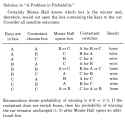
File: monte.png (202.6 KB)
202.6 KB PNG
>>16943645
Monte
>>
File: file.png (16.8 KB)

16.8 KB PNG
>>16943656
he trooned the name out
>>
This is the most exemplary case of scientific jewish pilpul, the probability doesn't change by changing shit. Now, you can slide this basic truth in a muddy sea of rhetoric and bullshit. Relativity is the second most pilpul case.
>>
>>
>but the statistical value of the revealed incorrect door (1/3) gets added to the unrevealed and unselected door!!!!11
No, it doesn’t. Monty is always going to open a door that wasn’t selected and show you a goat. Your choice is always either the door you selected or the door you didn’t. Three doors with one always eliminated before you make your final choice. It will always be 50/50.
>but waht if there was a million doors!!!1
Different problem entirely.
>>
>>
>>16937561
>>16937673
>>16938806
>>16941966
>>16943124
>but what if I change the premise completely to prove my bullshit argument?
Retards.
The problem is:
Three doors
Pick one
Wrong door eliminated
Pick one of two remaining
If you’re going to apply the problem to a larger number of doors, you need to apply ALL the rules, not just ones that suit your argument. So yes, let’s start with a ridiculous amount of doors, call it three million. Applying ALL of the rules from the original problem, here’s how it would go:
You pick a group of one million doors
Monty opens one million doors that you didn’t pick and all have goats behind them
You now get to choose between opening the million doors you originally selected or the remaining million you didn’t pick and Monty didn’t open.
Hmm it’s looking a lot like a 50/50 choice to me.
>>
>>
>>
>>
>>16943806
Literally this, it was always just a choice between two doors with some theater beforehand.
The foreplay to making your actual choice between one door or another doesn't magically transfer increased odds onto a door that you have equally little way of knowing the contents of as the door that you initially picked.
>>
>>
>>
>>
>>16937450
The Monty Hall problem makes sense when you take into account that the announcer is not picking a random door to open, because if they did, 1/3 of the time they would reveal the car….ending the game. So taking into consideration that they are always avoiding the car, you had a 2/3 chance of picking the goat on the first guess, once they open up the second door to reveal a goat, those odds haven’t changed, they were going to reveal a goat anyway, there was just a 2/3 chance that they HAD to pick the other goat to show you, so the door you picked STILL has a 2/3 chance of being a goat. Always switching means you will have a 2/3 chance getting the car, not 50/50.
>>
>>16944216
Best way to break the illusion for normies is just to expand the game. Say there were a million doors, 999999 goats and 1 car. You pick a door, game host opens 999998 doors revealing 999998 goats and asks if you want to swap to the other remaining door. Do you honestly believe its a 50/50 decision? 99.9999% of the time you did NOT pick the car, so when they open up the other 999998 doors, they are basically revealing where the car is. So you have a 99.9999% of winning IF you switch. You could expand this to numbers so incredibly large, where the odds of winning by not switching is essentially 0.
>>
>>
>>
>>
>>
File: 1775136150008918m.jpg (113.5 KB)

113.5 KB JPG
>>16937450
Here's an intuitive way to understand it:
Look at your flor and imagine it being covered in thousands of small white squares.
Now you select one square.
Now all squares disappear except the white squad you selected and another square that's red now.
Now intuitively how much bigger is the chance of you getting it right the first time over the correct square being revealed to you like this?
>t. intuitive genius
>>
File: 1774386273476100.jpg (10.9 KB)

10.9 KB JPG
>>16944236
Yeah in math to make something intuitive the easiest way to try to solve it for extremes. Just like the best way to start learning a concept is always to start with the simplest form of that concept.
>t. mathGOD
>>
>>
>>16944216
>so the door you picked STILL has a 2/3 chance of being a goat.
NO IT DOESN'T
EVERYONE DEFENDING THIS RETARDED PILPUL SCHEME JUST MAKES THIS CLAIM WITHOUT EVER ACTUALLY EXPLAINING WHY, YOU'RE JUST RESTATING THE HYPOTHESIS OVER AND OVER
THE ODDS AREN'T MAGICALLY TRANSPOSING THEMSELVES ONTO A NEW PROBLEM
PRECISELY BECAUSE THE HOST IS GUARANTEED TO OPEN A GOAT DOOR, HE ALTERS THE NATURE OF THE SECOND CHOICE INTO BEING A PURE 50/50, YOU HAVE NO IDEA OF KNOWING WHICH OF THE TWO REMAINING DOORS HAS THE CAR BEHIND IT, BUT YOU KNOW ONE OF THEM DOES, ITS A 50/50 AAAAAAHHHHHHHH
>>
>>16944403
It is if you have an equal amount of knowledge of what's behind either door and you know for a fact that one of the remaining doors has a goat and one has a car.
That is the most quintessential 50/50 ever created.
>>
>>
Hey anon here's two doors.
One has a car behind it and one has a goat behind it, what are your odds of choosing the door with the car?
50/50?
But anon, silly you! Before I asked you this question, there was a third door that had another goat behind it! When I eliminated that door, its odds magically got transferred onto one of these remaining two doors!
>>
File: mbti-chart.png (136.6 KB)

136.6 KB PNG
>>16944430
>actual human experience
you're right. Because different personalities take in the information and reason about them in different manners.
for example the goat example itself is a real world example for those who prefer dealing with real world objects, scenarios and facts.
then you have more abstract thinkers who try to explain it purely logically with mathematical notations/probabilities/percentages
my example is for the intuitives who are a much smaller share of the population so if we were to come up with an example it would be an intuitive example like the one with the squares
>t. Carl Jung reborn
>>
>>16944436
>It is if you have an equal amount of knowledge of what's behind either door
Yes.
And guess what, that is actually not the case here. That is exactly the thing.
You know how likely the car is to be behind your door (1/3). And, inversely, you know how likely it is not to be (2/3). Monty ALWAYS reveals a goat, no matter what, which means that he doesn't impact those odds in any way.
>>
>>16944442
>that is actually not the case here.
Yes it is nigger.
I know the removed door had a goat behind it, therefore of the two remaining doors, one has a goat and one has a car.
There is zero indication which door has a car and which door has a goat behind it at this point.
All the Monty Hall problem does it present you a 33% chance problem and then change that problem into a 50% chance problem before having you commit to an actual answer. The second question is a different problem than the first.
>>
>>16944440
Well yeah if you tell me about it then indeed I have to update my previous assumption.
You have to realise that probability is not about an inherent quality of the doors, but about my subjective knowledge. Of course the car is definitely 100% behind one particular door. But because I don't know which one, I have to assign it a probability.
>>
>>
>>16944444
>There is zero indication which door has a car and which door has a goat behind it at this point.
No, you know it's twice as likely to be behind the door you didn't pick. It's not definite knowledge, but it's an edge.
>>
>>16944447
>you know it's twice as likely to be behind the door you didn't pick.
But that's not true, it's equally likely because there's now only two possible choices. You change the nature of a problem and its odds change too, they aren't magically transitive between different problems for no reason.
A coin flip doesn't change its odds if the coin at one point in the past had 3 sides but now only has 2.
>>
>>16944448
>they aren't magically transitive between different problems for no reason
No, not for no reason, indeed.
For the reason that Monty Hall avoids the car and therefore, unless you managed to pick it randomly on your first try, it is necessarily behind the remaining door.
Your shapeshifting coin analogy is just affirming the consequent.
>>
File: 1774291915435d.gif (2.8 MB)

2.8 MB GIF
>>16944438
essentially it comes down to how much greater is the probability of the square being intentionally revealed to you (red quare) being the right choice vs the randomly picked white square being the right choice
basically intentionality carries more specificity and thus higher probability than randomness
>t. shizoGOD
>>
The Monty Hall Problem is the Emperor's New Clothes.
It's obviously wrong, which literally everyone agreed on when it first came up, but because of pilpul, credentialism and bad simulation models it's now accepted as an unquestionable truth that nobody wants to revisit, lest they look like a fool for questioning something *so obvious*.
>>
>>
>>
>>16944450
Him removing a goat literally just guarantees that the second choice is a 50/50 tho, it morphs the odds of your initial choice being right from 33% into 50%.
You have no greater knowledge of what's behind your door or the remaining door after a goat is removed, you know a goat is gone, all that means is that the remaining mystery doors now are equivalently likely to be winners in this new, altered problem, the same way the newly transformed coin now only produces 50/50 outcomes anymore.
>>
>>
>>16944457
Anon, which part do you disagree with?
1. You have 1 in 3 odds of randomly selecting the car out of three options
2. Monty Hall intentionally avoids the car when he is opening doors
3. Therefore, if you did not randomly select the car, the car is necessarily behind the remaining door.
If you agree to all these premises then there is no other possible answer than that switching doubles your chances.
>>
>>16944460
>Therefore, if you did not randomly select the car, the car is necessarily behind the remaining door.
This is true, but the odds of me having randomly selected the car are 50% once a goat is removed by Monty.
They don't remain 33% once the nature of the problem is altered, him removing a goat increases the odds of my initial choice being correct to the same level as the odds of the remaining door.
>>
>>16944459
You can play the part of both the contestant and Monty as long as you're honest with yourself.
Take three playing cards, doesn't matter which, but you're going to designate one as the "car".
Shuffle them and place them face down.
Set one apart.
Look at the remaining two; if the "car" is among them, set it apart and discard the other. If not, just discard one at random.
Now you can choose to switch or stay. Mark down which card was the "car", yours or the remainder. Do that a couple dozen times and watch the pattern form.
>>
>>
>>16944466
That's exactly WHY it becomes a 50/50.
He is guaranteed to remove a goat, which means that the remaining cards are guaranteed to be a goat and a car.
You have no way of knowing which of the remaining two choices is which, though, which alters the odds of the second choice to become a 50/50.
>>
>>16944469
>That's exactly WHY it becomes a 50/50.
No, you've got it backwards. If Monty opens a door at random, then it's 50/50.
Look, you're essentially both just picking a door. If you both pick at random, you have equal odds*. Now, you're telling me, that if Monty *knows* where the car is, his odds of fidning don't improve at all compared to random chance? No, he could pick it out every time, and the only reason he wouldn't be able to is if you've already eliminated it.
*I know what you might be thinking; doesn't he have better odds when picking randomly, considering he has one fewer doors to choose from? That may be true, but this advantage is offset exactly by the odds that the car isn't among his options at all, because you already selected it.
>>
File: artworks-meas256rZbR3Tq7p-Ozwe9g-t500x500.jpg (52.4 KB)

52.4 KB JPG
>>16944464
I TRIED THIS
I FINALLY UNDERSTAND
>>
File: 1775140540131193.jpg (83.1 KB)

83.1 KB JPG
>>16944475
>I FINALLY UNDERSTAND
based retard
>>
>>
>>16937450
Keeping choice straategy:
Timeline 1
> pick car
> win
Timeline 2
> pick goat
> lose
Timeline 3
> pick goat
> lose
Changing doors strategy
Timeline 1
> pick car
> change to goat
> lose
Timeline 2
> pick goat
> change to car
> win
Timeline 3
> pick goat
> change to car
> win
Presenter always leaks information about the position of a goat, if you keep your door, you're simply ignoring that information.
>>
>>
>>
>>16943208
Here's another intuitive real world example that's more fitting for the real world crowd:
1. You live in London with your family
2. I tell you that there's exactly one person in London that knows the secrets to the universe (and that person isn't you)
3. You say that it's your brother (randomly picked)
4. I eliminate all people in London except you, your brother and a seemingly random person standing in the subway.
5. Now if I asked you again would you still assume that you randomly correctly picked your brother or would you accept that me eliminating all people in London had something to do with showing you who's the most likely to be the person who knows the secrets to the universe that's standing in the subway (not saying that it's 100% but it's nearly 100% likelihood)
>>
>>
>>
>>
>>
>>
>>
>>
>>
what if you, along with and infinite number of people, arrived by bus to a hotel where an infinite number of goats and a single car lived?
The receptionist tells you the room number for the car but informs you that it had to move to a different room to make space for the the people that arrived, is the car happy?
>>
>>
>>
>>
The tweed suit and extravagance obfuscate what the choice actually is. What you're really deciding between is having one door or two. You aren't getting an "extra" 33% chance by switching. The unopened other door was always part of a choice that came with a 66% chance of winning.
If Monty asked you up front if you want Door A or Doors B and C, final answer, no switching, no theatrics, what would you do?
>>
>>
File: 1000013876.png (27.6 KB)

27.6 KB PNG
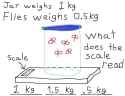
You guys can't teach, and are forgetting the hidden options that change the chance of the choices.
>>
File: 1000013877.png (109.9 KB)

109.9 KB PNG
Correct pic.
>>
File: fries in a jar.jpg (56.5 KB)
56.5 KB JPG
>>
>>16944901
which is honestly incredibly embarrassing for those mathematicians, there's nothing complex about the probability calculations or basic information theory involved, there's nothing to argue against.
Like sure it's a bit counter-intuitive at first glance, but if you're writing a fucking letter angrily "correcting" a problem in a puzzle magazine you'd at least try to work it out, or wonder why the answer isn't simply 50/50.
>>
>>16945892
Doing this on my phone sucks, the math in the first "no rules" section is supposed to be 66% win for switching and 33% win for keeping, but the final results show old maths and not correct update. And the ultimate results should be "it's always has been meme" But it's still good nuff. People should be learned by it anyway.
>>
>>
You have two gates to run through before the problem is resolved:
>first gate with three doors
>second gate with same layout but one option is closed off
You only have to be correct on which door you pick on the final gate to win the game.
However, the second gate is set up depending on your choice for the first gate:
>If you picked the winning door Monty is free to eliminate either of the losing doors at random
>If you picked a losing door Monty is forced to eliminate the other losing door
If we fully acknowledge that your 2/3 advantage lies in switching, this means 2/3 of the time you have forced the conditions of the second half of the game by dictating how the second gate is set up. 2/3 of the time you will have removed an element of random chance (Monty’s choice) that doesn’t directly change the odds of you winning, but changes the terms of how the game plays out.
Consider these three doors:
>car1
>goat2
>goat3
Scenario 1: You pick car1 at a random chance of 1/3. Monty will randomly remove goat2 or goat3 at a random chance of 1/2 each. Your paths to lose are 1/3 x 1/2 or 1/6 each, your single path to win is 1/3 x 1/2 or 1/6 total, leaving 3/6 or 1/2 of the possible paths (goat2 > anywhere or goat3 > anywhere) that could have developed inaccessible to you because you gave Monty’s random choice a say in the matter.
Scenario 2: You pick either goat2 or goat3 at a random chance of 2/3. Monty is forced to remove the other goat. Your paths to win are 1/3 x 1/2 or 1/6 each and all paths are open to you EXCEPT car1 > car1 simply because you didn’t pick car1 first 2/3 of the time.
>okay so what the fuck does this mean
Forcing Monty’s hand, which will happen 2/3 of the time, will close off less of the paths to you but the ratio of losing paths to total available paths is larger - 2:5
Allowing Monty’s choice which will happen 1/3 of the time will close off more paths available but the ratio of winning paths to total available is larger - 2:3
>>
>>
>>
>>
File: 1656622248403.jpg (154 KB)

154 KB JPG
>>16946588
>Science is NOT for you
based. now I am allowed to deny the Holocaust
>>
File: Screenshot_20260406_113744.png (47.3 KB)

47.3 KB PNG
https://pastebin.com/eeT0njST
I also made simulation, bit more verbose, but somehow more not shortcut that could affect result.
>>
>>16944901
It wasn't first proposed in Vos Savant's column - it had been a relatively obscure but known probability problem with a published solution. Being published in a popular column brought it widespread attention.
I point this out because we cannot discount the role of sexism in all this. Not only was the problem submitted by a man, seemingly in an attempt to test Marylin or trip her up; but the responses disagreeing with her were also overwhelmingly from men. One cannot help but wonder if the problem had been so controversial - amongst mathematicians at least - if it hadn't been a woman who gave them the answer.
>>
>>
>>16946110
>>16946115
Take your meds
>>
>>16947988
If you're a woman who can add 1+1 and get the right answer most of the time, you're already in extremely high demand as math columnist, game designer, software engineer, rocket scientist, etc. It's fair and noble for society at large to severely prejudge any and all women in math related jobs.
>>
>>
>>16937450
The host shows you ten doors. One has a prize, the other nine have goats. You pick a door at random. The host then reveals eight doors which have goats behind them and that you didn't pick. Would you like to switch?
Now, decrease the number of doors in the experiment by one and reread the problem. Continue until and including when there are three doors left.
>>
>>
This quote in the wiki page is what finally made it click for me.
>Suppose there are a million doors, and you pick door #1. Then the host, who knows what's behind the doors and will always avoid the one with the prize, opens them all except door #777,777. You'd switch to that door pretty fast, wouldn't you?
>>
>>
>>
>>
>>16937707
You were so close to understanding the actual TV show game problem.
There are always 2 doors. There never were 3 doors.
You will always pick 1 door and the game will remove 1 door, leaving 2 only, and then perform a je(wish)di mind trick for entertainment.
Doesn't matter if you switch, doesn't matter what the first pick is.
There are always 2 doors and you always have a 50/50 chance.
>>
>>16937716
Since a goat door is always removed,
The real choices in the game become
GC
CG
And it matters not which you picked nor if you switch, as the result is always a 50/50 chance.
There were never 3 doors. There were never going to be three doors.
There was always only 2 doors.
2 choices.
A coin flip.
The monty hall problem is a test to see if you're gullible to deception via obfuscation.
It's a goy test.
>>
>>16943656
In other words
The only way to win by not switching is to pick the right box first time. Which is a 1/3.
There is always a way to win.
Therefore switching will let you win the 2/3 of the time you pick the wrong box.
>>
>>
>>16951551
Anon, the host can't remove your door. That makes your pick relevant.
>>16951554
>Since a goat door is always removed,
>The real choices in the game become
>GC
>CG
But these are not equally likely, because if we start with
GGC
GCG
CGG
and then we remove one G from among the latter two, you see there are two ways to get GC and only one to get CG
>>
>>
>>
File: 1769756956459374.jpg (18.1 KB)

18.1 KB JPG
it's 1/3 chance of getting the car if you don't switch and a 1/2 chance if you do
>>
>>
>>16951646
What about this do you not understand.
The game theory is the illusion of choice, the player never has 3 options. There is always 1 goat and 1 car. The inital choice is always either a goat or a car, and switching is always to either a car or a goat.
It's a 50/50 chance.
>>
>>16951778
I understand it perfectly, what do YOU not understand?
>the player never has 3 options
Yes, he does.
>There is always 1 goat and 1 car.
There are two goats and one car. That's twice as many goats as cars.
>The inital choice is always either a goat or a car, and switching is always to either a car or a goat.
Yes, that is true! Can you figure out why the answer is nevertheless not what you think it is, despite this being the case? In fact, can you figure out when switching is to a car, and when it is to a goat?
>>
>>
>>16951783
I'll walk you through this very slowly.
>The inital choice is always either a goat or a car, and switching is always to either a car or a goat.
You agree with this. It's your own words. Let's break it down.
>The inital choice is always either a goat or a car
How likely is your initial choice to be a goat, as opposed to a car? Are they equally likely, or is one more likely than the other, and if so, how much more likely?
>switching is always to either a car or a goat
Under which conditions would switching lead to a car? And under which conditions would switching lead to a goat?
You're so close, Anon!
>>
>>
>>16951790
Answer the questions, Anon
Surely you're not too stupid for that?
Surely you can't be stumped by one so infinitely inferior to yourself?
Maybe, by answering me, you will even enlighten me by your effortless wisdom
Don't sell yourself short, you can do it!
>>
>>
File: intro-1758216006.jpg (44.1 KB)

44.1 KB JPG
I have ascended beyond these earthly mortal limits and see the true nature of the problem.
People are retarded, Monty is a dick, and gameshows are stupid.
There are only 2 lights, and acknlowledging this fact is impossible for people who are still mortal animals.
>>
>>
>>
>>
>>16951808
Again, in the context of two choices with no variability, yes.
Yes you finally understand.
Monty's magic fire circle dance does nothing to affect the chances.
It either rains or it doesn't.
You either picked a goat or car door.
You either stay or switch to an opposite door.
Coin flip.
>>
>>16951823
>Coin flip.
>>16951799
>>
>>
>>16951829
>What part about the player never actually has 3 doors do you not understand.
The nature of your pathology. Are you just severely dyscalulic, or are you suffering from some sort of psychosis, or some delusional disorder?
It literally could not be more straightforward. There are two goats. You can pick either one. You can count them. One. Two. Two goats, ah-ah-ah.
>>
>>
>>16951834
>I have seen through the ILLUSION that is MATHS and MATERIAL REALITY into the great beyond where all goats are one
At last I see, I was shackled in a cave, seeing only passing shadows that I mistook for separate goats, when in fact they were merely aspects of the ideal goat
>>
>>
>>
>>
>>
>>16951862
Monty removing a door of a known, constant value is the trick. The game illusion.
Because Monty always removes a door, and because the door always has a value of G, the correct way to sequence the odds is starting with only two doors that are a 0 and a 1.
Ultimately the choice or act of switching is irrelevant.
You either picked G and switched to C, picked C and switched to G, or picked and stayed, the result is always it being a 1/2 odds.
All prior and subsequent information and choices are completely irrelevant to the reality of the situation.
The gameshow trick is the illusion of choice and chances. That's the entertainment.
For this particular scenario, with these particular variables, the game itself is really a 50/50 chance.
>>
>>16951856
Stepping aside from Monty Hall for one moment.
If we just had 1 choice between 3 doors, with goats behind 2 of them and a car behind one.
How many cars and how many goats do you think you'd end up with if you did it 30 times?
Assuming uniform distribution, as in Door A has the car as many times as Door B, and Door C.
>>
>>
>>
>>16951930
Apply the order of operations, there's only one operation, it's a variable subtraction, so logically the removal of a G from the G/G/C pool haplens before any choice should be calculated.
You're left with G/C or basically, 1/2 odds.
Nothing about the overcomplication of the problem changes this.
There were never two goats.
There couldn't be two goats as the gameshow host always does a goat removal from the choice pool.
I'll simplify this even further and claim there is only ever one door, the door picked regardless of circumstance, and only two possibilities for what is behind the door.
1, 2. 1/2. 50% odds of a goat or car.
Deal with it.
>>
>>
>>16951943
Cool post.
Now can you answer my question?
3 doors, you'll pick one.
And you're doing it 30 times.
You'll end up with 30 things.
Assuming uniform distribution, each door will have the car as many times as the other doors over these 30 times, while the others have goats.
Monty isn't even here right now to open a door and offer you a switch.
How many goats, and how many cars do you get if you open the same door every time?
Also, how many goats and cars remain in behind the doors you didn't open?
>>
>>
>>16951969
You're spacing more than I do, makes it seem like the gpt comment is more projecting than anything since the reddit spacing is demonstrably projecting.
You can still answer the question btw. Monty isn't here to hurt you.
>>
>>
>>
The error people make in both these problems is applying the rules of probability to their future but not their past.
You can point the math both directions. Time is a one way street, but your thought process doesn't have to be!
>>
>>16951943
Oh look another rube trying to invent ever more fantastical solutions to justify their inept understanding.
For the purpose of explanation let's only always pick door #1.
2 times out of 3 your door will be a goat. 3 doors, 2 goats, 1 car. 2 out of 3 times your #1 door will always be a goat.
Montezuma, with his grand sense of charity, behooves himself to always show you a goat door from the two you didn't pick. Then asks if you'd like to change your pick to the other door.
For simplicity and the purpose of explanation it doesn't matter if door 2 or 3 is the goat, or if 2 or 3 is the car, or if door 1 is the car.
66% of the time you picked a goat. 100% of the time Sir Montague shows you the other goat.
Not switching gets you a goat 66% of the time.
Switching gets you a car 66% of the time.
It's that simple. And that is how two remaining choices from three starting doors still gives either 33%, if you didn't switch, or 66% if you did, win rate.
>>
>>
>>16944435
What if you picked the car you dumb little cunt
That 50/50 is valid only in the 2/3 cases you picked a goat. The remaining 1/3 of the times (when you picked a car) there is a 100% chance of losing by trading
I'm sure you can draw your results now
>>
>>
>>16937450
The core logical problem is about whether mathematical resolutions are more effective than intellectual cognitive demand.
Human Beings are corresponding to the effort they issue towards an missionary ideal of spreading ones own effort, thus, while choosing the %of being right does logically levitate towards majority choice, to deviate from the majority, even for minor rewards than otherwise generates popular solutions through creative thinking.
Intellect is not rewarded for showing itself simplistic(66%)but choosing correctly (33%) alleviates symptoms of defeat.
Mathematicians do not factor-in the fact that (66%) correlates to *confidence* within the human emotional spectrum and that by discussing "put at stake confidence" turns the 'singular argument' into a struggle to maintain balance.
Alternatively, this places the 'giving up 33%' as a clear cause of *vulnerability* which is objectively more worse than a motorbike is more good.
Example
a)choose 33%,0 investment within your choice, significant payoff either way(a goat isnt useless,females give milk,males can be butchered and eaten)
b)choose 66%,become vulnerable if your gamble does not pay off,dislike the very concept of 'goat',show off ingratitude towards 'first-choice'.
>>
>>16937450
Imagine you are given a three-sided object.
Each side is labelled - A, B, and C.
You are told that the object will be thrown into the air, and if you can guess which face it will land on you will receive a prize.
You thoroughly examine the object and confirm that each face has an equal chance of being landed on, 33.3-33.3-33.3.
You pick side B.
Before the object is thrown, it is filed down into a two sided object, leaving side B intact.
You are asked whether you still want to choose side B, or switch to the newly created side, side D.
Once again, you inspect the object and conclude with certainty that each side has an equal chance of being landed on, 50-50.
Does changing your to the new side improve your odds of getting the prize?
>>
>>
>>
>>16958430
>Its the same problem as the Monty Hall Problem in principle.
No? It's nothing like it. It would be the same if filing down this object weighted it in favour of side D, I guess - in that case the stipulation that whoever does the filing doesn't touch your chosen side will always bias the object against that side.
But then why come up with such a contrived scenario to explain something that can be easily understood with doors, or playing cards, or something?
>>
File: 1773355283855565.png (14.7 KB)

14.7 KB PNG
it gets a lot easier to see the solution if you expand the sample
you got 1000 doors, 999 fakes and 1 win
you chose one at random, now the moderator removes 998 fake doors
do you think the chances of winning are equal for both doors?
>>
File: 1000-1-998.png (9.4 KB)

9.4 KB PNG
>>16958437
>>
>>16958435
>>16958435
>whoever does the filing doesn't touch your chosen side will always bias the object against that side.
Except they don't.
You're fabricating fanfiction.
The scenario clearly stipulates what the chance of landing on each face is.
>why come up with such a contrived scenario to explain something that can be easily understood with doors
Throwing dice/coins is incredibly simple conceptually.
Changing the shape of objects via grinding/whittling is also intuitive.
In fact I'd venture that its significantly less convoluted than the overwrought gameshow scenario of the original problem.
Let's face it, you're bitter that by reframing the problem I've exposed how ridiculous the Monty Hall's 'answer' is and are flailing to avoid facing the obvious truth.
Each shape has a distinct static probability for rolling each of its faces.
By grinding down the shape into a new one you are not complicating the problem, you are simply replacing it with a different one.
In the same sense, the two phases of the Monty Hall problem are isolated from each other - but the scenario treats them as if they aren't.
You are given a choice between three options.
Then...
You are given a choice between two options.
There is no logical reason why you'd gain a +16% for changing to a different option on the second stage.
> Tl;dr: You were taught something was true, but never paused to consider if it actually makes sense. Now you blindly defend your golden falsehood with the fervor of a zealot.
>>
>>16958468
No, Anon, you're simply wrong and your entire argument is begging the question. I know that I changed your scenario; I changed it to actually correspond to Monty Hall, which you, in your lack of understanding of the original, failed to do. Your contrived scenario offers no insight whatsoever because all it does is belabour your initial mistake.
>>
Any door I choose, can be a winner,
Any door I choose, can be a loser
I can never choose the goat, because
the goat is always a door I didn't choose AND always a door that isn't a winner.
now we are left with two doors.
but that's the illusion, there was only ever two doors
there was never a third choice
>the goat is a lie.
switching your choice after doesn't increase or decrease whether the the door you chose is the losing or winning door.
>>
>>
>>
File: Monty Hall.jpg (53.4 KB)

53.4 KB JPG
>>
>>16958472
alright nerds
I was taking with an LLM about this
I'm still not happy, but consider this
the golden marble game, 100 marbles, the one winner is gold
you grab a marble
1:100 chance it's gold, yeah?
the host reveals a glass marble, discards it
asks if you'd like to switch?
Let's say you keep it
the host has two marbles left in the bag
and reveals one to be glass
now there is one marble left in the back
the host asks you one last time if you'd like to switch.
is it really a 50:50 choice?
Or is the marble you're holding onto the same 1:100 chance marble from the beginning?
would you switch?
did you really grab the golden marble the first try?
or?
now, if you switch a marble every time, when you get down to 3 marbles,
one in your hand,
two in the bag
the host reveals a glass marble
now you have one marble in your hand,
there is one marble in the bag
the marble in your hand is a 1:3 probability of winning
the marble in the bag is?
Do you switch?
I don't like it at this small scale
>>
>>
>>
>>
File: 1769293176228623.jpg (34.9 KB)

34.9 KB JPG
I'm going to add an additional twist:
Let's say you're lucky and you've been chosen to be a participant on the show. You make it to the final decision and the first door with the goat has been revealed. Last year, you read about the Monty Hall problem and learned that your odds are better if you switch. But the pressure makes your memory foggy, is it better to stay or switch? You figure you're memory is either right or wrong, so 50% chance of being right.
In this scenario, aren't your odds of guessing right now 50%?
>>
>>
>>16958497
Bone of you guys were able to explain it in a way which made sense to me.
Zooming out to the marble game made it click.
And it only suggested 3 marbles, I'm the one who scaled it out, the deduced I held a marble with 1:100 probability of being right.
The LLM was much gmfaster to respond, and much more personal.
Not that I didn't trust you guys,
but I needed to actually understand it for myself, and it just wasn't clicking here/I stopped reading at a point to rope thr LLM into it.
Funny enough, Google put a disclaimer on that chat to be careful about what the LLM says and to grab a parent topkek
But yeah, wow, it makes sense.
I makes perfect sense with the marble game. It still feels uncomfortable with the goat game; I don't don't like it.
I wonder if it's because 33% and 50% aren't far enough apart? But they are - That's a huge difference.
I need to reconcile with myself why the goat example feels uncomfortable but the marble example I'd bet my life on.
>>
File: images(277).jpg (28.6 KB)

28.6 KB JPG
>>16958657
Of course I could have scaled it with doors, too. The marbles are arbitrary.
Was a neat thought exercise.
>>16958633
checked
The next thread is going to be about flipping a coin, how the past does NOT determine the probability of the future, that each flip is independent of the last, isn't it?
Ship it.
>>