Thread #2958927 | Image & Video Expansion | Click to Play

File: 1760014617031737.jpg (394.1 KB)

394.1 KB JPG
I have a 1 year + 27 day old microwave and it's blowing a fuse when I try to use it. I'm not sure what's wrong with it and I'd like to save it from a landfill. It came with a 1 year warranty and warranty expired like 20 days before it broke and the company (Hamilton Beach) refused to service it.
I rarely used it and I've used it maybe 20 times to warm up some food over the past year. After I used it last time, it died while cooking in mid-cycle. I could see a flash of light. When I opened it, I saw a blown fuse. It uses those small glass fuses and I had to order them from Amazon.
I was hoping it would be as simple as replacing a fuse but obviously that's not the case. Clock and electronics works fine but it immediately blows a fuse when I try to actually cook with it.
What's wrong? What can I check? I have a DMM.
104 RepliesView Thread
 Showing all 104 replies.
>>
File: 1742938937409879.jpg (322.8 KB)

322.8 KB JPG
>>2958927
This is the distribution board for the AC. That small glass fuse on the right is what blows when I try to use it.
>>
File: cap.jpg (136.8 KB)

136.8 KB JPG
This happened to a friend once. He found that his high voltage capacitor (yours circled in red) had failed. He lucked out and found a replacement in another microwave oven that was non-functional and being junked. Careful, lots of stored energy in those.
>>
>>
>>2958945
Thanks! How do I check if mine is dead?
>>2958963
>Not OP. What are you supposed to do then? Just wait a day or two before touching it?
You can just short it with a screwdriver from what I've seen others do online. Some have a fancy resistor with some wires that drains it and converts energy to heat. But I doubt that shorting it does any damage....
>>
>>2958945
>>2958927
>>2958929
>Capacitor
I've fixed a bunch of trash microwaves, and this is the snswer
Especially if it sounds like a garbage disposal.
>PROTIP: the capacity controls how many watts are being used so if you go down in uf then you change the microwaves power output.
>>2958963
>What are you supposed to do then? Just wait a day or two before touching it?
Assuming there's even a bleed off resisting in the thing.
>Don't assume that. A CAPACITOR CAN KEEP A CHARGE FOR DECADES AND THESE STORE THOUSANDS OF VOLTS. YOU WILL DIE
you have to short the capacitor out. Ideally with rubber gloves, insulated pliers used to hold a price of u shaped copper wire to connect the 2 leads on the capacitor
>>2958965
>How to check
After reading my entire post especially the green text about dieing
After the capacitor is discharged you read the label for what if it's supposed it because then use a multimeter of dedicated capacity meter to check it's actual value.
The capacitor is usually the problem, door switch is second but those don't blow the fuse like you said
>>
Make sure to keep the capacitor shorted with a wire or something after you remove it since it can partially charge back up.
Usually the capacitance reading is good enough to tell when it's bad, but sometimes it can read the correct value at multimeter voltages and only fail at higher voltage. I've found ESR to be a more reliable indicator if you have something that can measure it.
>>
File: 1751085249378402.jpg (214.7 KB)

214.7 KB JPG
>>2958945
>>2958990
>I've fixed a bunch of trash microwaves, and this is the snswer
>Especially if it sounds like a garbage disposal.
>After the capacitor is discharged you read the label for what if it's supposed it because then use a multimeter of dedicated capacity meter to check it's actual value.
OK, I took the capacitor out of the circuit and I've check it for shorts. It's not shorted (I get 0L).
I also checked capacitance... it's dead on what it's supposed to be: 1uF.
Do you still think it's a capacitor? I can order one off Amazon but I have a suspicion something else is causing the fault.
>>
File: 1762922506258965.jpg (169.6 KB)

169.6 KB JPG
>>2959000
>Make sure to keep the capacitor shorted with a wire or something after you remove it since it can partially charge back up.
Before I took it out I shorted it with a screwdriver and a piece of wire while wearing gloves and there were no sparks.
Does anyone know what this black component that's connected to ground is? I thought it was a bleed-off resistor but when I check it, my DMM says 0L. It's also not a diode (I does have that white "band".. or maybe not) since diode check was also 0L.
Thanks guys! I really appreciate the help.
Anyway, I'm open to suggestions for what to try next...
>>
>>2959023
>black component that's connected to ground
HV diode. Disconnect power and test the resistance of the transformer coils. Primary should read low, between 1 and 5 Ohms. Secondary should be higher, between 30-130 Ohms or thereabout, with another low voltage winding that should be under 1 Ohm.
>>
File: 1740146866035287.jpg (225.4 KB)

225.4 KB JPG
>>2959026
Primary is 1.5 ohm and secondary is around 0.6 ohm.
>>
>>
File: 1745203636205274.jpg (182.4 KB)

182.4 KB JPG
>>2959037
>Put one probe on the transformer casing and the other probe on the secondary.
0L.
So it's not shorted?
>>
File: 1749295085018349.jpg (117.9 KB)

117.9 KB JPG
>>2959026
>HV diode.
Thank you for confirming it's a diode.
It seems to be dead. Shows 0L and no voltage drop on a diode check (yes, tested it in both orientations).
So at a bare minimum, the diode seems to be dead. I can get that off Amazon for $5.
If the transformer's dead, then the whole MW is a write-off because the replacement is 60% of the value.
>>
>>
>>
>>2959045
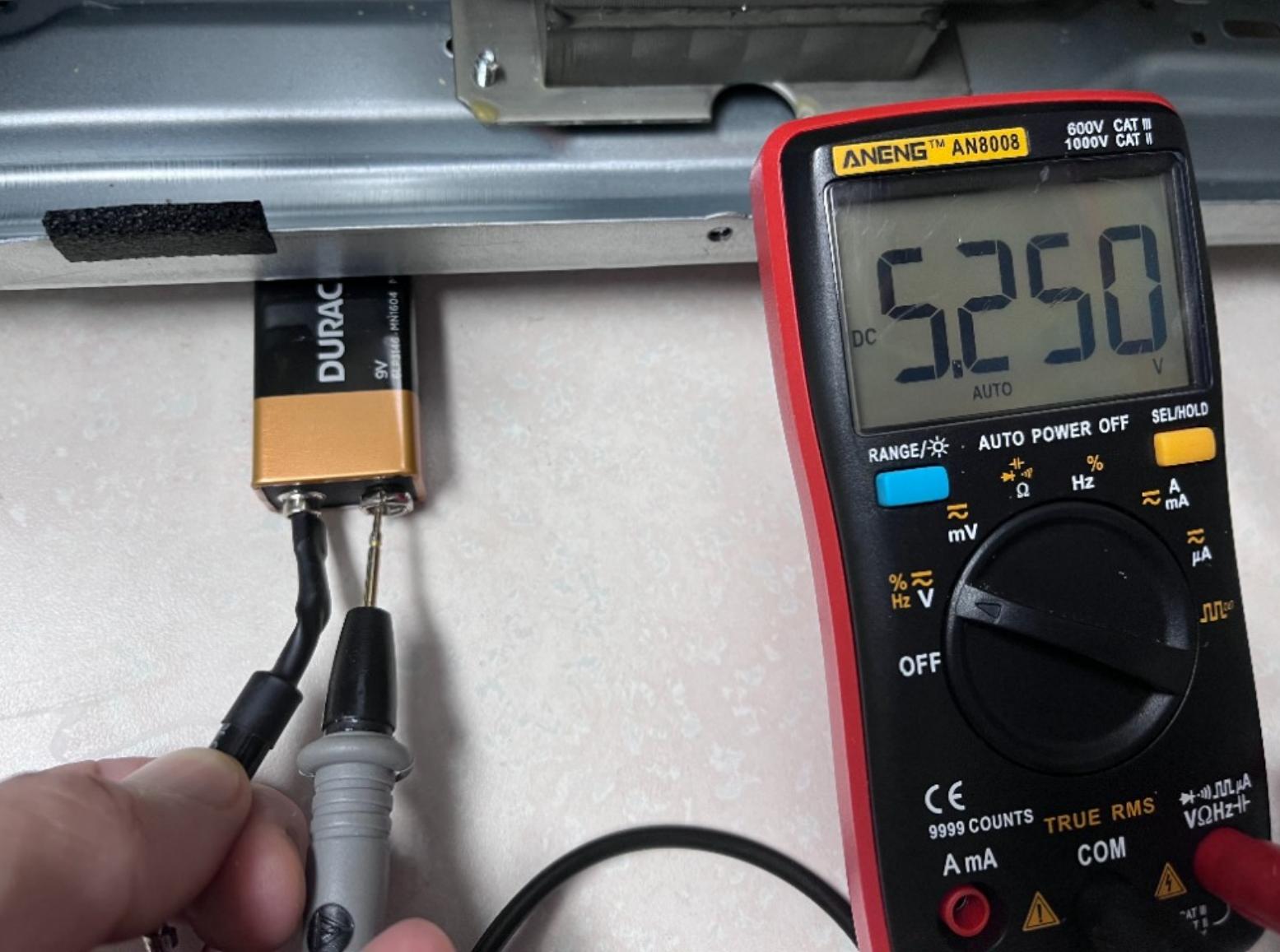
Put one leg of the diode on one of the battery terminals. Then probe the other end of the diode and the other battery terminal with your meter set to DCV. Then flip the diode or swap the probes and read it again.
>>
File: 1753746310762582.jpg (190.7 KB)

190.7 KB JPG
>>2959045
>>2959050
Thanks! Managed to find a 9V battery.
It test either 0L and in one orientation it tests 0.0 V.
I'm guessing that's a short?
>>
>>
>>
>>
>>
File: 1754823154222895.jpg (155.2 KB)
155.2 KB JPG
>>2959060
>Set your meter to read DC Volts.
>>2959062
>You should get a reading in one direction but not the other.
Battery's 9V (checked).
In one direction, diode shows 0V and in this direction,
>>
>>
>>2959061
>Should probably test the transformer with all the other shit unplugged.
I unplugged one side of it (that pink/reddish connector).
>Why do the wires look frosted?
Feels like wax...
>>2959064
>I didn't even know the 9v requirement, I think I've tested them with my meter and validated them fine without the 9v
I have no idea. I'm familiar with the basics and know nothing about MW stuff and HV diodes.
>>2959069
>The diode is good. So it's either the transformer or magnetron.
Fugg. Either way it's a writeoff.
I'll cancel my diode order....
>>
>>2959069
>>2959067
Check the window in the cooking area.
Like open the door like you're putting food in and there's a square patch in there
That think is a window, it's invisible to microwaves
If it's caked in food and crap it needs cleaned because the caked on food is reflecting microwaves back into the magnetron
Also CAREFULLY remove the magnetron and see if the end is burned or exploded.
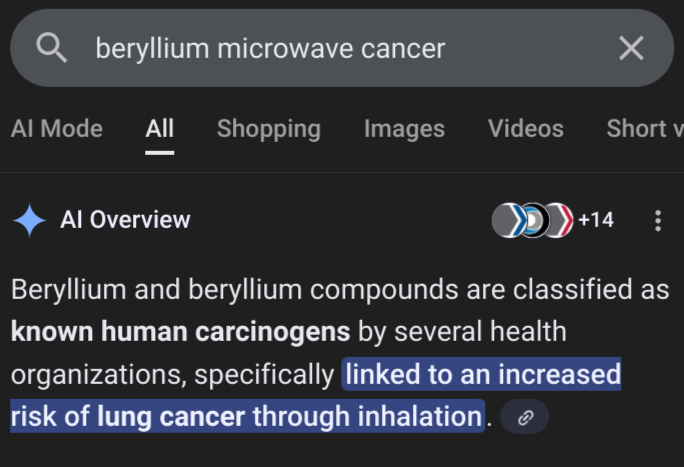
Just post a picture of it and be sure to take it out straight and slowly or you'll scratch the ring on the end which might be super cancer dust
>>
>>
File: 1753069114842796.jpg (112.6 KB)

112.6 KB JPG
>>2959026
>HV diode. Disconnect power and test the resistance of the transformer coils. Primary should read low, between 1 and 5 Ohms. Secondary should be higher, between 30-130 Ohms or thereabout, with another low voltage winding that should be under 1 Ohm.
>>2959073
>Check the window in the cooking area.
>>2959074
>The window as in not the door glass. On the side where the magnetron is mounted there will be a plastic looking cover inside the cooking area.
Looks brand new. I only heated stuff with it and almost always it had plastic wrap.
>>
File: 1750688239310597.jpg (541.5 KB)

541.5 KB JPG
>>2959073
>Also CAREFULLY remove the magnetron and see if the end is burned or exploded.
>Just post a picture of it and be sure to take it out straight and slowly or you'll scratch the ring on the end which might be super cancer dust
This was a bitch to remove. Hidden/inaccessible screws and a bent-over sheet metal clip.
>>
>>2959080
You got some splatter on there, very small but it could do it.
You wouldn't believe the state of some people's microwaves, like imagine you put c4 in a mountain of taco bell and chili. Just fucking carnage.
>>2959081
Doesn't look too bad, seems to be something going on with the white ring (that's where the cancer used to live). Is it cracked? What's the black lines on it?
Look around the gold sponge and the tip, any signs of shit being melted and fried?
>>
>>
File: 1751070378427057.jpg (197.4 KB)

197.4 KB JPG
>>2959082
>You got some splatter on there, very small but it could do it.
I don't think that's food. I think it's embedded in this material (mica?).
>>2959082
>Doesn't look too bad, seems to be something going on with the white ring (that's where the cancer used to live). Is it cracked? What's the black lines on it?
It's ceramic and those lines are just on the scratches on the surface... probably happened during my removal or installation.
>
>Look around the gold sponge and the tip, any signs of shit being melted and fried?
No. I can't see anything.
>>
>>
>>
File: 1741781698366902.jpg (177.9 KB)

177.9 KB JPG
>>2959088
>Test the magnetron resistance (should be <1 Ohm).
0.4V
> Then probe for a short with one probe on the magnetron housing and the other on one of the HV terminals.
No short. Tried both terminals to the housing... no beep.
>>2959092
kek.. I did. I
>>
>>
>>2959098
What makes the transformer bad, exactly that's pretty rare
>>2959097
If it's the transformer, and the primary is still good, you now get to lean transformer rewinding for other projects like a diy car battery charger! People hoard these transformers for high amp projects
I doubt it's the transformer though
>>
>>
>>
>>
>>
>>2959110
His waveguide that looks pitted, power grid, still could be theagneyrin it's some chink shit
Hell, it might even me something on the control board in the part that relays the transformer to be powered
If it's a critical component, my money would be on the magnetron failing when it gets hot
>>
>>
>>
File: 1741456146896887.jpg (2.7 MB)

2.7 MB JPG
>>2959098
>>2959104
>>2959105
>transformer
>>2959118
>Make him test the secondary and inspect for charring.
>>2959116
>The fuse is blowing so it's not a low side problem. Unless there is some visible gunk on the magnetron, I think it's fine.
I changed the fuse, I disconnected the secondary wires going into the magnetron and I disconnected the secondary output going into the capacitor. I then plugged it in and the panel was working. After setting it to 10 seconds, and pressing start, it immediately blew the fuse and I saw the flash of light.
I'm no expert but I think this proves that the transformer is internally shorted.
Unless I can find it for dirt cheap, I don't think there's a point in replacing the transformer itself. RIP I guess.
>>
>>
>>
>>
File: 1749027208492642.jpg (31.7 KB)
31.7 KB JPG
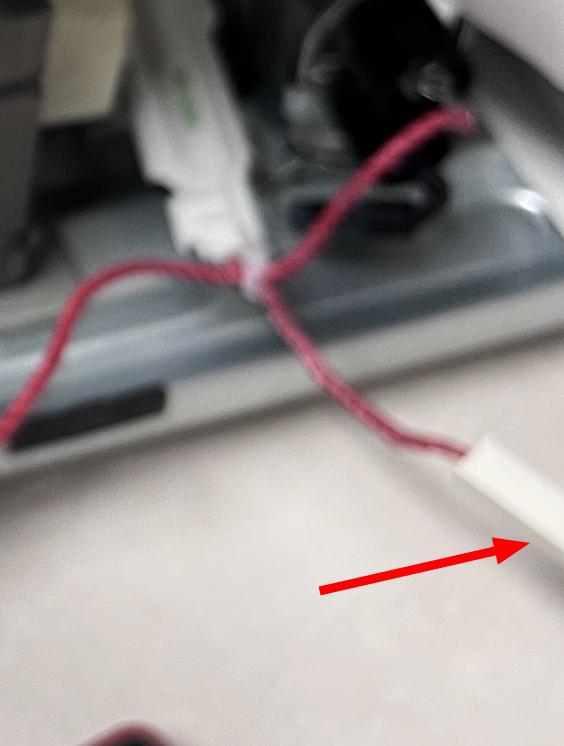
>>2959122
>Unless you got the wrong fuses, the transformer is toast. Make a spot welder with it.
The fuses are correct... 20A 250V.
>>2959125
>you can't properly test a capacitor like that without an old school capacitor tester.
OK, but I don't think it's the capacitor. Fuse still blows with it out of the circuit.
>>2959128
>Disglchage the capacitor again and test the resistance on the secondary
It was completely disconnected the second
>Did you put the diode back in and in the right direction?
Yes. It's impossible to put it in backwards because the ground has a screw terminal and the capacitor side is a spade.
>>
>>
File: 1751631481671178.jpg (157.1 KB)

157.1 KB JPG
>>2959132
>That's not the HV fuse
That's the fuse on AC input side. It's what new microwaves come with. My old MW had that large ceramic-encased fuse.
HV fuse is inside of that plastic housing and it's fine. It never blew and I tested it.
>so maybe it's the fan
Fan works. It spins up when I plug in the MW.
> light
Light bulb is fine. It lights up when I open the door.
> turntable motor or bad relay on the control board.
Did not test for those. Could be.
But at this point all signs point to a shorted transformer.
>>
>>
>>
>>
>>
>>2958929
There is likely a small colored SAFETY CAPACITOR labeled with a capacitor value and a X/Y Designation and voltage rating that looks like its next to your fuse and line in wiring. It's purpose is to short/open and blow the fuse in the event of failure, it's there to prevent power surges and provide a safety factor depending how it's wired.
Replace that safety capacitor with same value/type and replace the fuse.
>>
>>
>>2959376
Safety Capacitor
X1/Y2 capacitors are safety-certified components designed for use in applications where electrical shock or fire hazards must be mitigated. They are suitable for both "line-to-line" (X rating) and "line-to-ground" (Y rating) applications. This dual rating makes them versatile for filtering interference and protecting electronic equipment.
Key characteristics of X1/Y2 capacitors:
Safety Standards: They are certified to meet international safety standards such as IEC60384-14 and UL60950-1.
Failure Mode: Unlike standard capacitors, X1/Y2 capacitors are designed to fail in an open state when subjected to a power surge, preventing short circuits that could lead to fires or shocks.
Applications: Commonly used in power supplies, LED lighting, telecommunication equipment, and for lightning and surge protection.
Dual Rating: The "X1" rating indicates a higher impulse voltage tolerance for line-to-line applications, while the "Y2" rating is for line-to-ground applications. A Y-rated capacitor can often be used in place of an X-rated one if its voltage rating is sufficient.
Many YouTube videos and web info on safety capacitors.
>>
>>2959381
Line input safety capacitors in microwave ovens, often called Y-capacitors, are crucial for filtering electrical noise and protecting the user from electric shock. They are designed to fail open to prevent shock, filtering electromagnetic interference (EMI) and surges by allowing noise to pass to the chassis ground. Unlike the main high-voltage capacitor in the magnetron circuit, these are specifically for the power line input.
Function
Filtering EMI: Y-capacitors are placed in the line input circuit to block or divert radio frequency interference and other electrical noise from the AC power line before it can reach the internal circuitry or be radiated by the oven.
Safety: They are safety-rated capacitors designed to prevent a person from receiving an electric shock if they touch the oven's chassis. They do this by safely grounding noise currents that might otherwise flow through the case.
Surge protection: They help protect the sensitive components inside the oven from voltage spikes and surges from the power line.
Safety considerations
Failure mode: Y-capacitors are designed to fail in an "open" state, meaning they break the circuit rather than shorting it. However, if a Y-capacitor shorts to ground, it could be fatal.
Professional service: Due to the risk of electrocution, it is recommended that only trained professionals service components connected to the AC line, especially if the case has been opened.
High-voltage capacitor: Do not confuse the line input Y-capacitors with the high-voltage capacitor found in the magnetron circuit. The latter can store a lethal charge even after the oven is unplugged and requires a specific, dangerous procedure to discharge.
Replacement: If a line input safety capacitor needs replacement, it is critical to use a capacitor that is specifically rated for line-to-ground (Y-rated) service and has the correct voltage and capacitance values.
>>
File: 1732916611758099.jpg (205.2 KB)

205.2 KB JPG
>>2959376
I found it. It's supposed to be 0.1 uF.
When I measured it in circuit, the value was 102.4 nF. It was also not shorted... it measured 0.9 Mohm.
>>
File: 1761351668017052.jpg (595.3 KB)

595.3 KB JPG
>>2959378
>Also check the value of those two blue capacitors (test out of circuit) on that fuse circuit board -looks like a common-mode line noise suppression filter.
Two blue capacitors measured 4.53 nF and 4.52 nF respectively.
>>
File: 1753760229076414.jpg (547 KB)

547 KB JPG
>>2959406
And for the sake of completeness, here's the back of the board.
Question: could I bypass this board and wire the MW directly to AC just to test if it works without it?
>>
>>
>>
>>
>>2959405
>>2959406
The caps are fine.
>>2959407
I think you should unplug the turntable motor, probe the coil resistance (should be between around 40-140 Ohms), and probe for a short. Then probe your door switches for continuity to make sure they're opening and closing as they should. Take a pic of the control board while you're at it, and examine the relays closely (both sides of board).
>>
File: Screenshot_20251122-125904-213.png (102.5 KB)
102.5 KB PNG
>>2959460
>>2959459
>>2959457
The new ones aren't supposed to have it anyway
>>
>>
>>
>>2959463
>I think you should unplug the turntable motor, probe the coil resistance (should be between around 40-140 Ohms), and probe for a short. Then probe your door switches for continuity to make sure they're opening and closing as they should. Take a pic of the control board while you're at it, and examine the relays closely (both sides of board).
I've tried it all. Switches do seem OK. Relays measure correctly in the off position.
I've actually purchased a new MW in the meantime and it's using "inverter" technology so there's no transformer. It's amazing how much lighter it is than my "old" MW.
Also, it's a lot quieter.
>>
>>
File: 1577708396128.jpg (41.8 KB)

41.8 KB JPG
>>2960749
It's only dangerous if you disregard the dangers and just stick your wiener in there without even looking. Don't be that guy.
>>
>>
File: 1750200431596493.jpg (27.6 KB)

27.6 KB JPG
>>2960749
>Damn, this all sounds dangerous. For most of us, the rule is don't mess with microwave ovens and garage door mechanisms.
They're not that dangerous at all if you know where the danger lies. Only that capacitor has the capacity (kek) to injure you. And you can easily avoid that buy using gloves and by shorting it. Unless you plug it in, nothing else is dangerous.
>>
>>2961051
>Just dealt with an almost identical microwave and one of the door interlock microswitches was sticking closed and this was blowing that same fuse.
Hi, thanks for the info. The problem with that theory is that I know exactly how the MW died... it died during the defrosting in mid-cycle. It didn't die when I was opening or closing the door or when I was just starting it. It died during the operation. I seriously doubt that the switch would fail like that in mid-cycle.
>>
>>
>>
>>
>>
>>
>>
>>2960749
Capacitors are dangerous as fuck. If they're not discharging a shitload of power into you, they're exploding and sending shards of shit into your eyes because you fucked up the circuit.
If you don't know what you're doing, don't fuck with them.
>>
>>2963954
idk theres a 600 vs 800mA rating on it
it didn't work so there must be more things wrong with it
how do you take the glass fuse out of the case anyway looks like it's press fit onto the terminals or something
>>
>>2964173
>idk theres a 600 vs 800mA rating on it
The A/C input fuse should be in the 15-20A range. Most are fine with a 20A so most MWs use that.
What broke in yours is a high voltage fuse which is usually 0.9A. Those fuses are usually in a plastic holder and you just pop it out by prying it with a screwdriver. Try prying from the end caps and not the glass itself.
>>
>>
>>
>>
File: Panasonic-NE1054C-Commercial-Microwave-Oven.jpg (18.2 KB)
18.2 KB JPG
>>2958927
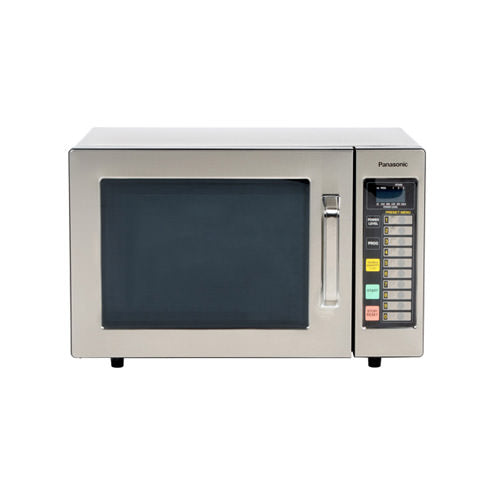
That's why I stopped buying consumer stuff. All designed to fail. Commercial microwaves can at least take some beating.
>>
>>
>>
>>
File: 1539796320247.jpg (19.3 KB)

19.3 KB JPG
>>2964821
Why not?
>>
>>2958990
is the cap also responsible when it appears to heat the food sometimes and doesn't other times and when it does its kinda weak and theres also a little bit of the weird sound and the light kinda flickers a bit
>>
>>
>>
>>
>>
>>
>>2958927
Hello mate, I'm not goin to go through every reply. But same thing happened to me where the fuse broke. What I did was get an 10A circuit breaker and replaced the fuse with it, and shoved it inside the microwave. Used 2.5mm to go from each end to the fuse terminals. No need for a new fuse if ever blows again.
Use you multi to check voltage at terminals too.
Aussie licenced electrician
>>
>>
Some door switch failure modes will blow the fuse, especially if more than one door switch has failed. They’re triply redundant for a reason. And the switches are maybe the safest and easiest thing to check and one of the cheapest and easiest things to replace.
>>
>>
>>
File: IMG_20251217_192107.png (301.2 KB)

301.2 KB PNG
Born too late to lead poisoning,
Born too early to microplastic poisoning,
Born just in time to microwave cancer.