Thread #2972754 | Image & Video Expansion | Click to Play

File: IMG_8288.jpg (443.6 KB)

443.6 KB JPG
Is there a proper way to remove baseboards from the wall without fucking up the wall and breaking the wood into pieces?
20 RepliesView Thread
 Showing all 20 replies.
>>
>>
File: superbar.jpg (13.5 KB)
13.5 KB JPG
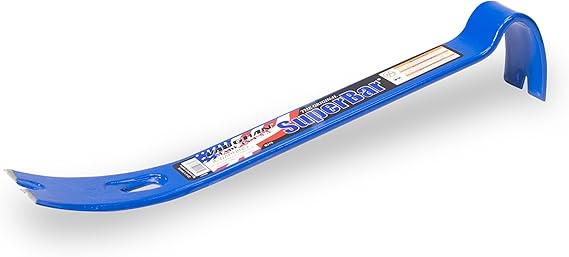
use the widest, flattest bar you have and avoid trying to pry it off like a gorilla
>>
File: IMG_8289.jpg (278.5 KB)

278.5 KB JPG
>>2972764
>>2972770
Very helpful thanks anon, looks like I need to get a better prybar.
These are the nails that are in the baseboard, I’m guessing there’s no way to pull these out beforehand right? Should I just punch them through
>>
File: t28962-ce0ddbcb86a581016444fe50da1be862.jpg (27.1 KB)

27.1 KB JPG
An actual trim puller instead of cat's paw or demo tools. You can leverage more against the framing than the voids, as in the bottom plates and studs.
>>
>>
>>
>>2972754
>use a knife to carefully make sure there's no silicone or paint holding the edges (go slow to avoid damaging the paint or baseboards)
>use a thin bar like >>2972776
>pick a good starting spot after checking how the order the baseboards were installed
>carefully insert the long side all the way to the floor
>pry
>>2972781
Git gud. Modern shitters are actually easier than real wood since they are held on with tiny nails
>>
>>2972783
This is a 50's house with drywall, that was built with all douglas fir (no pine anywhere!) wood for casing, trim, studs and framing.
I wanted to pull up all the DF baseboards and sand and re-shellac them, since the original lustre is beaten to hell after 70 years. But honestly it may be easier just to get on my knees with a sanding block and sand and shallac in-place. this piece split into 3 pieces but after a night of titebond i was able to repair it and sand/shellac it and it looks much better.
There's also red oak floors and birch veneer hollow doors that have been doused in yellowed shellac but thats for another day.
>>
File: IMG_8252.jpg (4 MB)

4 MB JPG
>>2972799
Here’s a sample, the left is how most of the baseboards look now, the right is one I was able to pull off, sand down to bare wood, condition, And shellac, it’s old growth aged Doug fir so it’s already a warm colored wood so the shellac gives it a deep rich shimmery color
>>
>>
>>
File: file.png (1.5 MB)

1.5 MB PNG
>>2972809
You don't like shiny baseboards?
the whole house will eventually get cleaned up, I dont want to replace all the baseboards right now because 1 they wont blend in with anything and 2 its all old growth doug fir that has this dark color to it and both oak and pine are way too light, so my best bet for my OCD is to just reuse what is there.
pic related is me trying to match that same color
>>
>>2972775
I might be lazy but after everything is pulled off I sometimes cut the nails off flush on the inside using an angle grinder. I always liked pulling them out but too many times I had bits of wood coming out with the nails that made it really ugly afterwards.
>>
>>
>>
Utility knife, 5-in-1 tool, trim puller like >>2972776, mini crowbar, putty knife. Cut paint and caulk to free the board from the wall. Identify where the nails are and work a tool like the 5-in1 or the putty knife behind the baseboard. Go down to the next set of nails and do the same. Very gently work the tool back and forth, on the nail, to pop it out. Put another 5-in-1 against the wall to protect it from a trim puller or mini crowbar. It takes time and you need to be gentle. Gotta work each nail down the line. Gotta get as close to the nail as you can when you stick your tool behind the baseboard.
>>
>>2974287
Also, you aren't gonna be able to protect everything perfectly. You will need to do some sort of repairs. The wall will be easy enough to touch up once you get the board off and you shouldn't worry about minor damage as long as you can keep your lines and your colors consistent. It's baseboard, so usually only a handful of areas in the house will be high visibility. Most people don't look down there. Excessive nail holes in the trim will probably be your worst offender, but at least you can put some colored putty or some wax to fill.
>>
>>2974286
It may share the same color, but it won't act like it and the grain will give it away. Old growth is in a league all its own. It is so much more resistant to everything and it will sit on the wall much differently over time. If a piece of old growth is still straight, then it's gonna stay straight for another 70 years. Young stuff will have a mind of its own. The only con to old growth is it can be brittle and prone to splintering.
>>