Thread #18327460 | Image & Video Expansion | Click to Play

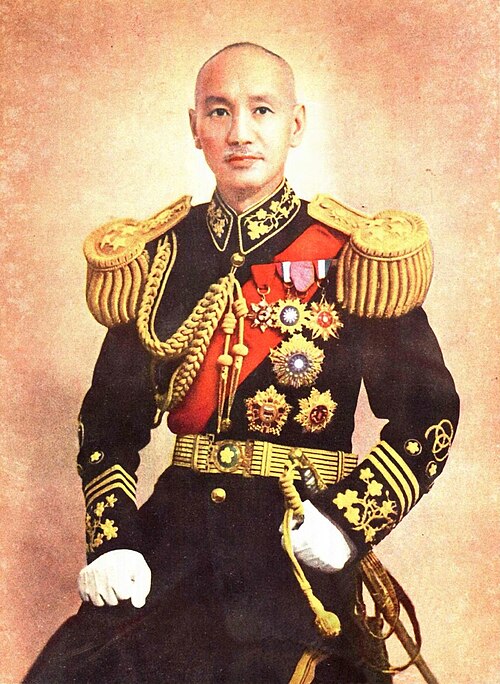
File: Jiang_Jieshi2.jpg (120.3 KB)
120.3 KB JPG
Was Chiang Kai-shek a good leader?
23 RepliesView Thread
 Showing all 23 replies.
>>
>>
>>
>>
>>
>>
>>
While I personally like him, he was not a good leader.
>but he purged le commays!
His biggest mistake. Purging commies should've came after the Japanese issue was dealt with. Had he actually went through with unifying the North and dealing with the Japanese threat he likely would've unified China, but hubris or paranoia got to him.
>>
>>
>>18327460
Could have been worse and if he run unopposed the country would've probably turned out like India, maybe more corrupt.
The way he delt with oppistion, both foreign and domestic, was absolutely awful though.
>>
>>
>>
>>
>>
>>
>>18327460
This shouldn't even be a left/right political question. If anything the more you sympathise with him politically the more you should hate him. He basically single handedly made China communist through world historic incompetence, malfeasance and corruption.
>>
>>18328020
oh lots of reasons
>corruption and incompetence from the top down. Chiang was a dictator who prized loyalty over competence
>KMT crashed the economy because of massive inflationary spending to fund the civil war
>when people protest the civil war they got machine gunned
>80% of the country was rural peasant farmers and KMT had absolutely no answer to communist radical land reform, and the army regularly seized grain from farms
>military had extremely low morale and units were constantly defecting to the communists, units that remained loyal just sat in cities and waited as the communists cut them off by attacking supply lines, then destroy them one by one. Despite having massive advantages over the communists.
I'd say it comes down to this
1. the communists succeeded as a revolutionary movement because the nationalists had hollowed out their support among every facet of Chinese society, so no one wanted to fight to preserve them, and the communists genuinely inspired people (even though they later failed to actually live up to any of their promises).
2. They failed on the battlefield despite outnumbering the CCP by so much at the start of the war, because of poor military strategy in Manchuria with the troops just holing up in cities, which left the countryside undefended. That let the communists conduct radical land reform and establish base areas at will. This snowballed over time, and the war was lost in Manchuria in 1948 when the Nationalists refused to evacuate their best units hoping they would somehow turn things around if they knew there was no retreat. But this obviously failed and the forces that were cut off were crushed. Things very rapidly went downhill after this militarily.
>>18328020
Minimal support in the cities either as the war went on, other than the secret police. The KMT became a state hated by its own people that nonetheless propped itself up by terrorizing its citizens, similar to what we just saw in Iran.
>>
>>18327460
in his diary he wrote about how he wanted a nuclear world war to happen between the communists and capitalists because he would ally ROC with America, America would win, and he would become the supreme leader of the atomic ash pile formerly known as China.
He was a true psychopath.
>>
>>
>>
>>18327460
He manages to unify at least briefly and helped the most in holding against the Japanese. He lost eventually because of stupidity but he managed to salvage a total defeat into at least a stalemate. 5.5/10 leader which translates into a 7.5/10 leader for China relatively speaking
>>
>>18327460
No. He was a corrupt despot who catastrophically handled the civil war and war with Japan as well as the economy. I believe it was Joseph Stilwell who said something along the lines that he was much more concerned with enriching himself and his family and building his real estate portfolio in America and Brazil than he was with actually winning the war against Japan.
>>
>>18328168
I don't think your analogy really works here. The Taiping was a state in rebellion actively working to topple the Qing. The commies were a faction of the KMT at the time before the purge. Compared to the KMT, the commies were pretty insignificant even if having Stalin's blessing. All Chiang really had to do was force the commies to fight the Japanese and northern warlords. Had he done that, China would've been unified before the Rape of Nanjing even, and Mao would be a footnote in history.