Thread #64807409 | Image & Video Expansion | Click to Play

File: smythbusters_birdshot-home-defense-thumbnail.jpg (187 KB)

187 KB JPG
Any gunsmithing questions you have, ask them here, hopefully some knowledgeable anons will be hanging around.
I'll start with a question of my own: I have an old black powder cartridge rifle with a very small barrel bulge about 1.5 inches (like 37mm for metric frens) from the muzzle. Do you think the problem could be solved by counterboring the shit out of the barrel just past that bulge? A new barrel isn't really an option.
71 RepliesView Thread
 Showing all 71 replies.
>>
>>
>>64807685
The effect of a compensator or muzzle brake depends on the strength of the gas jet compared to the momentum of the bullet. If you're shooting some sort of weird 50gr +p++ load from a 0.5" barrel you'll have a large benefit from a compensator even though you might not end up with much velocity
>>
>>
>>
>>
Not exactly gun smithing, but do I *need* something like a receiver block or reaction rod to remove a barrel? I want to remove a handguard, not sure if I'm just missing something, but I think it calls for removing the barrel/barrel nut or something. RIS II rail specifically. think I should just go to a shop and have someone do it for me since it'll be cheaper
>>
>>64807409
>small barrel bulge
First question: how does it shoot now? Bulges aren't necessarily deal breakers, and if it's black powder then you're (hopefully) shooting lead bullets, which will minimize the issue. If it shoots straight, don't worry about it.
>>
>>
>>
>>
>>
>>64810884
If you have the tools to cut rifling, you have the tools to bore out a piece of bar stock. There are some videos on youtube about how to DIY rifling. It's not especially difficult, but the quality is poor. Good rifling is difficult and complex. There's a reason why only a handful of companies make virtually all the barrel blanks.
>>
>>
>>64808102
You need something to hold the receiver while you remove the barrel nut. You could make a receiver block out of wood if you don't want to buy anything. The downside of any type of external clamping block is it puts all the torque on the barrel pin and its notch, which can twist or break the upper or bend the barrel pin. That's why action rods with fins like the Midwest Industries ones are preferred. The magpul bev block does basically the same thing for much cheaper, but is a little less convenient to use.
>>
>>64809008
Can you post a pic of this gun, or describe more about it? Specifically, the caliber, the barrel thickness near the bulge, and what the barrel construction is? Also, what gun is this?
Normally, I'd be inclined to agree with >>64808332, bulges aren't much of a concern especially if they are closer to the muzzle where pressure is relatively low. I'd say don't worry about it unless you have reason to. However, I'm wondering how the bulge got there in the first place, so it's good to get some more info.
>>
>>
File: SW Barrel Bulge 2.jpg (720.6 KB)

720.6 KB JPG
>>64807409
Shoot the fuck out of it, the gun will be fine. I double tapped on a squib with this Model 10 in 2014, noticed a bulge immediately, and I've put thousands of rounds through it since without even a reduction in accuracy.
>>
File: IMG_20230318_170356452_1_12.jpg (3.9 MB)

3.9 MB JPG
>>64810947
It's an old Kropatschek from 1886. /msg/ hasn't been knowledgeable in years, and when I did ask, they assumed the gun was a rust pile and that was about it. It has no rust. Bulge is JUST detectable when you run your finger over it. Camera wouldn't take a decent picture
>>
>>64807409
Still trying to figure out used Beretta 84BB (safety, not decocker) fuckery.
>cock hammer
>put safety on
>pull trigger
>trigger snags a little, sometimes nothing happens, either getting past the snag or not being able to overcome it
>sometimes it snags and the trigger gets past it, then drops to half cock (!) when the safety is flipped off, despite letting go of the trigger beforehand
I've started to cut the potential causes down. The "snag" is the trigger that's supposed to be dead still interacting with the hammer/sear/whatever. Pushing the right side safety up eliminates this. Perhaps it's bent or worn. I've replaced the right side safety roll pin. It may also be a worn trigger bar spring as aiding it can help a little. The trigger release lever also likes to tweak and twist or even come out of its hole a little and pushing that flat with the frame completely stops this issue. I've seen people say theirs was bent or damaged causing a dead trigger.
>>
>>64808102
You want a clamshell ideally but I've assembled several uppers with just channel locks and the nut wrench with only aesthetic marring to the upper. The rods that hook into the barrel extension are only good for installing muzzle devices; you risk shearing your barrel indexing pin using them to apply torque to the upper receiver, opposite of what >>64810942 says. The top ribs they've been adding mitigate the potential for damage but they're still not ideal for anything an armorer would do.
The upper receiver is basically a big, oddly shaped bolt that the barrel nut torques onto. A clamshell is the odd shaped socket wrench to apply torque to your bolt. It applies less force to the receiver because it applies that force further from the bore centerline. The "reaction rods" turn the barrel into an Allen key with 5 of the corners rounded off.
The only reason to put torque into the barrel extension is for installing or removing the barrel extension from the barrel itself, which is something only barrel manufacturers should be doing. Anyone using or recommending a reaction rod for armorer work didn't make it through the first year of engineering school.
>>
>>
>>64812301
>It applies less force to the receiver
No, you somehow have this backwards.
The clamshell is the cheap halfass option. It applies more force tot he receiver because it contacts the receiver directly. The whole point of a reaction rod is that it transfers less force to the receiver.
>>but but but the threads are on the upper! that's why it's like a big bolt!
Anon, the majority of the friction encounrtered when tightening a nut is not from the threads, it's from the contact under the head. In other words, the friction between the barrel nut and the barrel extension is the real problem, not the receiver. The reaction rod engages the barrel extension directly, taking most of this force. When you use the clamshell you save a few bucks, but now you're putting a lot more load on the pin and the notch in the upper.
> didn't make it through the first year of engineering school.
Big talk from someone who doesn't understand bolt torque.
>>
>>
>>
>>
>>
>>
>>64812610
The whole point of the reaction rod is to sell expensive tools to retards who buy them because they look cool and think they must work better because they're more expensive. When you use a reaction rod, you're applying the same amount of torque to the upper receiver as with a clamshell except it's concentrated on the indexing pin instead of being spread around the surface of the upper. I'd draw you a free-body diagram to explain what's going on but you don't have the capacity to understand it. If you want, you can look up what a free body diagram is and draw what you think is going on and I'll look at it. I'm sure it'll be good for a laugh
>>
>>
>>64813382
>you're applying the same amount of torque to the upper receiver as with a clamshell except it's concentrated on the indexing pin instead of being spread around the surface of the upper
No.
> I'd draw you a free-body diagram to explain what's going on
Please do. You're talking to a Mech E, but you aren't fooling him.
>>
>>
>>
File: AR-10.jpg (43.7 KB)
43.7 KB JPG
>>64807409
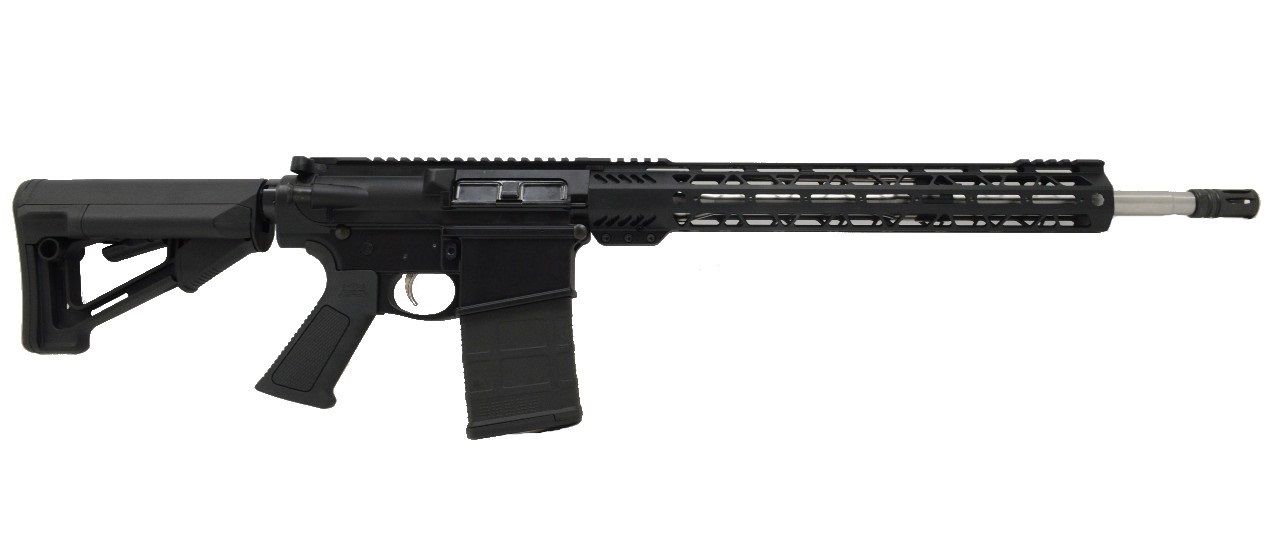
Is there a good reference book on tuning the AR-15? AR-10? I am curious about buffer weights, springs, gas length, etc. If I swap uppers on different lowers, what do I need to keep in mind?
>>
https://en.wikipedia.org/wiki/7.62%C3%9739mm
>Bullet diameter
>7.85–7.9 mm (0.309–0.311 in) SAAMI[1]
>7.92 mm (0.312 in) CIP[2]
So can you really use bullets from .309 to .312 in 7.62x39 guns without any problem? Is this some sort of "Russian guns are so sloppy the bullet is the least of your problems" thing or are even higher end bolt actions okay with this range?
>>
>>64808655
Start 200 years ago. You have nothing of worth to contribute now. To understand this go to a US Patent Repository and look "Guns, Hand". My advice would be to study Chemistry and how to make better shit to make guns out of. The problem with gun ideas is it always turns out the material of the day won't allow it. make something like affordable easily workable titanium and then go pick out an old unworkable design and breath life into that.
>>
>>64819270
Basically every rifle cartridge standardized by SAAMI has a -.003" tolerance for bullet diameter; It's not unique to 7.62x39. The infamous carcano loads using .264" bullets were just out of that tolerance so it's obviously not ideal to be that much undersized. It's pretty rare to see bullets that far off the spec thobeit.
SAAMI won't admit it, but you can use bullets pretty far over spec with good results. I've heard good things regarding the accuracy of .312 bullets down .308 bores. Somewhere in one of Ackley's manuals he mentions one of his friends that frequently shot 8mm bullets through a .308 bore with no resizing but good results. I think he gave some more extreme examples but I can't remember them off the top of my head.
>>
I'm not a gunsmith, but I have a question about rifling
rifling has existed since around the 1500s and I am curious how they made rifling back then
all searches have only given modern methods that were not possible before the industrial revolution
does anyone know how rifling was done back before the industrial revolution with ye olde blacksmithing techniques?
>>
>>64819493
I gotchu famalamadingdong
https://youtu.be/AHdZJNV0BpI?si=WJtdeoQKDfb51ID_
>>
>>
File: IMG_9410.jpg (1.9 MB)

1.9 MB JPG
Can Anyone suggest a good single piece scope mount that will fit on a howa 1500 and put up with stupid recoil?
First rifle project, usually I’m more of a handgun person. Appreciate any suggestions.
>>
>>64808102
Theres doing a thing correctly and doing something with the potential to fuck up and damage a part. You can get away with the wrong tools but the risk is much higher. If you had to you could stand on the reciver to hold it and use vice grips to adjust the barrel nut. You mar the fuck out of everyhing and potentially torque it wrong but it would be fine for the most part.
>>
>>64822548
>good single piece scope mount that will fit on a howa 1500
https://dnzproducts.com/product/215-tactical-howa-1500-weatherby-vangu ard
>>
File: IMG_9409.jpg (2.8 MB)

2.8 MB JPG
>>64822582
Thank you anon. End project is an intermediate range big bore with about 44 foot pounds of recoil before accounting for the effects of the brake. .500 diameter, 2600 fps at the barrel with a 300 gn ftx bullet. Should be at about 1300 ish fps at 350 yards with 1400ish ft/lbs of energy left. 17 inches of drop at that point though.
>>
>>64818017
For an ar15 you want a vltor a5 buffer with a a5h2 buffer and a green spring co spring. If you're using a silencer or full auto you'll want more buffer weight.
For an ar10 I like full length receiver extensions because you can much more weight in the buffer. KAK industry has pretty heavy full sized ar10 buffers. There are also extra power springs you can use. Slash who does heavy buffers recommends wolff springs I think.
The shorter your gas tube, the higher the PSI, and the faster the bolt carrier speed. Larue large frames for example are famous for being violent guns. More weight in the buffer slows this cycle of operation.
You can overbuffer a gun. Your gun might shoot very soft but this reduces the reliability of the cycle of operation. For example, shooting straight down or straight up, or shooting in cold weather or in shitty dirty environments. It's good to give the rifle a little more carrier speed than the minimum.
The general reliability test is to put your gun, 3 rounds in a magazine in in freezer. Try to fire a round and see if it feeds the next round. Try to shoot straight down into sand try to soot straight up and see if the bolt locks back. The idea here is you're trying to look for short stroking where the bcg isn't cycling all the way. Making the gun cold tightens the tolerances on the bcg slowing it down. Cooling the ammo slows the chemical reaction of the gunpowder. Shooting down and up is the most challenging for the rifle to cycle.
This is enough to get you by.
>>
>>
>>
IAny gunsmithing questions you have, ask them here, hopefully some knowledgeable anons will be hanging around.
In lieu of a Remington 1740 in 12 gauge, is it possible to bolt two 20 gauge shotties (right hand and left hand) or should I just get a DP 12 and call it a day?
>>
>>
File: 2026-01-31_10-53.png (550.2 KB)

550.2 KB PNG
>Guise remember you can only get good at gunsmithing by going to le sonoran desert institute click my link in bio
>>
File: which threading is it2_cleaned.jpg (877.1 KB)

877.1 KB JPG
>>64807409
Hello it's me again. My gun is a used G17.4 from Austria with matching threaded barrel from the factory. I bought the tools /k/ told me about to measure my threading. See picrel : I might be wrong but it now seems to me it's a 1/2x28, which is strange for a gun made in Austria (usually 13,5x1 LH). Still, I sure can't screw any proper 1/2x28 device I own (2 different thread protectors and 2 different comps), all of them being stuck at some point. So, is it because the crown is slightly damaged (see picrel) and prevents my devices to screw on, or is it because it's not a 1/2x28 at all ?
>use a thread file and correct the damaged part
I bought one too. Using the 28 TPI's part, it doesn't seem to change this much for the moment ; granted I did not go full force in fear of fucking everything up. So the damaged part is still there, just a little smoother.
>inb4 it's a 13,5x1 LH moron
Well I tried all my 13,5x1 LH devices too, and they fit less even. They just kinda float around the thread, barely screwing in.
>is it another threading ?
Like 14x1 ? Or 16x1 ? Is it looking anything like a 1/2x28 ?
Anything could help bros. Thanks.
>>
File: threads.jpg (175.1 KB)

175.1 KB JPG
>>64824964
Maybe it's just the light and shadows but it almost looks like it's not actually 28 tpi and might be something like 26, 25.4, or 24. If the 28 tpi gauge completely overlaps the threads rather than just the last 4-5 does it still fit?
>>
>>64825011
>If the 28 tpi gauge completely overlaps the threads rather than just the last 4-5 does it still fit?
Damn ! In fact, it does not exactly. Meanwhile, the 24G, 25G and 26G seem to fit much more tight, even If I can't say which ones fits the best. What the hell does that mean ? Which standard could it be ?
>>
File: calipers.jpg (179.2 KB)

179.2 KB JPG
>>64825263
Maybe 1/2x24 or 1/2x26, or 13x1 and the diameter might possibly be a bit small depending on what the actual tolerance is. If 24, 25, and 26 are closer than 28 I doubt it would be 20 or 22 tpi or 0.75mm. Also when you measure the major diameter of the threads use the flat portion of the calipers rather than the sharp portion at the end so there's no chance of measuring at an angle or of the sharp portion going into the thread and giving a measurement that's incorrectly small.
>>
>>64825382
>when you measure the major diameter of the threads use the flat portion
Right : it's more 12,9 (or 12,8 if I use a little push/force) than 12,7 now, with the flat portion.
>I doubt it would be20 or 22 tpi or 0.75mm
Yep, no, clearly not. No fit at all.
>If 24, 25, and 26
24 seems out, does not fit this good. 25 or 26 are very close from each other.
>1/2x28
Some of my 1/2x28 (RH) devices screw on one third of the threads, maybe close to half of it.
Could it be europeon 13x1 RH instead of LH ?
>>
>>
>>
>>
>>
>>64825587
>it should probably be 1mm rather than 26 tpi
Well, the 1.0 (metric) does fit very well too. Sounds promising. I believe you cracked it, anon. Many thanks. 12,9 diameter + 1mm (close to 25-26 TPI) could mean 13x1 RH.
>mfw my dumb face tried to use 1/2x28 thread file
I sure hope I did not fucked everything up godamnit.
>>
>>
>>
>>
>>64823190
I've seen some debate on various forums that the a5 system doesn't do anything a good springco spring can't do without minimal gains in performance for the cost. Is that true, and if not why? Genuinely curious
>>
>>64825632
Not true at all. Once you start to think about it it's kind of obvious. You have the gas, which expands at a variable rate from the moment the primer is struck and as it passes over the gas hole the pressure wave does a slight complete inversion from the point where the gas block connects to the barrel foreskin and I don't really know the answer but thanks for reading this far.
In short, yeah pretty much.
>>
>>64825632
Original guy you were replying to here. The best spring you can use is a full rifle length spring. The a5 is really a rebranded ar10 carbine receiver extension for the ar15.
The best recoil system in terms of cycle of operation is a full rifle length receiver extension because it allows for the most possible buffer configurations, buffer weight, and a rifle length spring. In an ar10, maxing the weight can be necessary.
An A5 is a compromise that allows a full sized rifle spring, heavier buffers than a carbine but less than a rifle length, more possible buffer weight permutations than a carbine though less than a rifle length, and allows for a collapsing stock. It's superior in every respect to a carbine length system.
The marines did a study on the vltor A5. It substantially improved the cycle of operation of the guns they tested. The guy who owns springco recommends the a5 system over the standard carbine because the load of the recoil is distributed across more total wire with a rifle sized spring.
So far as tuning your gun is concerned, the slower the cycle of operation, the lighter the recoil and parts wear, affording faster follow up shots, This comes at the expense of the reliability the weapon cycling under adverse climatic and shooting conditions. This is why duty guns are gassed harshly. If you are in a trench, you want the gun to cycle every time no matter what. This is why people bitch about the 416, mk18, larue, scar etc. These are intended to operate in harsh conditions. If you soften them up too much, you might short stroke or fail to strip rounds from the magazine.
>>
>>64827713
Do I understand correctly that the A5 improves cycling by slowing down the cycling time without compromising reliability as a result of having the extra spring tension and buffer weight? How picky are these systems to different configurations, or is it more forgiving for the above reasons? (Suppressed, auto, running a variety of ammo, etc)
>>
>>
>>