Thread #25051447 | Image & Video Expansion | Click to Play

File: maxresdefault.jpg (262.7 KB)

262.7 KB JPG
>Schopenhauer died for this
288 RepliesView Thread
 Showing all 288 replies.
>>
>>
>>
>>
>>
>>
>>
>>
>>
>>
>>
>>
>>
>>
>>
>>
>>25052336
>Mind is just brain matter interacting in a way that produces conciousness.
There being so little evidence for this after decades of physicalist investigation is why idealism is now being seriously entertained again.
>>
>>
>>
>>
>>25051447
His view makes more sense than physicalism, but physicalism and idealism are both extravagant and puzzlingly unmotivated positions to hold. Mind exists; matter exist. Neither are the fundamental building block of reality--nothing is.
>>25051541
The existence of matter is the best explanation for why we perceive matter and why matter percepts are stable, predictable, and convergent between persons. Matter obviously exists.
>>
>>
>>25051526
That is the key to truth. Faith is a higher form of knowledge.
I think Oswald Spengler does a good job of exploring this sentiment in Decline.
Logic is a trap that raises more questions than it answers and quickly leads to problems that are unsolvable.
>>
>>
>>
>>25052791
>Faith is a higher form of knowledge.
This is easily shown to be false by the huge variety of nonsense people have faith in that you agree is untrue.
>Logic is a trap that raises more questions than it answers and quickly leads to problems that are unsolvable.
Logic is one of just 2 disciplines in which absolute proofs are even possible. You used logic to compose your post. The computer you typed it on is a physical implementation of logic, hence "logic gates"; computers are logic machines.
>>
>>25051447
Why do these types always choose mediums that are explicitly and solely grounded in materialism to get their message to me (technology)? Why not vibe it to me through metaphysics or some non-material way? Oh right, one works because it is grounded in reality and the other doesn't because materialism is all there is.
>>
>>
>>
File: 1606076921897.png (257.6 KB)

257.6 KB PNG
>>25051995
justin martyr and the greek philosophers thought you could identify that the Bible is true from first principles + the text of the Bible
>>
>>25053010
Material is everything that exists in the observable universe. Non-material things are proposed ideas about other planes of existence which do not, in fact, exist. Your turn, define what you think non-material means and how, if possible, these forces could ever interact with the material.
>>
File: Abraham.jpg (89.6 KB)

89.6 KB JPG
>>25053019
Hear any voices lately?
>>
>>
>>25053029
What? I just outlined how I define material. It's like saying everything in the circle is x and everything outside the circle is y. It's not a claim, it's literally just defining terms. Are you retarded? Also, I noticed you dodged actually defining it yourself. Sad.
>>
>>25053029
>this is not a definition. it's a claim about what you think material is
And there it is. The most retarded post on /lit/. A definition is what you think a thing is, anon. You asked for something and then complained when you got it. Seriously, never post again, your IQ must be chimpanzee level.
>>
>>
>>
>>25053069
Ideas only exist as electrochemical signals in a brain with very specific structures. Information is just that, material in a certain formation. Sufficiently damage the material structure, and the phenomenon of an "idea" can no longer occur.
>>
>>25053036
>>25053066
>>25053074
>what is material?
>material is everything that exists
you think this is a definition?
>what is a spoon?
>a spoon is what you use to eat
making a claim about the thing is not defining the essence of what that thing is.
Define material and non-material. I want a clear definition on what material is.
>>
File: IdealistNPC.png (91.1 KB)

91.1 KB PNG
>>25051447
>Materialism is fal-ACK!?
>>
>>25053137
The criteria you have laid out is capable of infinite expansion. You can always return with "that's just a claim". Also, I specified "exists in the observable universe", so you can't even accurately represent the definition I gave you already. Again, can't help but noticed more dodging of providing ANY definition on your end.
>>
>>25053082
>Sufficiently damage the material structure, and the phenomenon of an "idea" can no longer occur.
you damage the structure that can access ideas but how can you destroy ideas?
>Ideas only exist as electrochemical signals in a brain with very specific structures.
but what are they? are they specific neurons? can you make an idea appear by getting a brain and simulating "Apples are red and green"?
sounds like materialism magic
>>
>>
>>25053159
so you can't define material/matter
>Again, can't help but noticed more dodging of providing ANY definition on your end.
>>25052998
you said this, remember? I thought you can name what matter is if you say all idealists use matter to communicate about their philosophy, when the point is that idealism is about the essence of the material, which you can't even define. That's the point, you have no definition of matter, and you have no idea about the subject.
>>
>>25053176
This is like asking if you turn off the computer so that electrons no longer run a program whether the program was destroyed or whether the program is non-material. Again, the program, like the idea, is hardware running specific coding.
>>
>>
>>25053195
I said that idealists use technology that is based solely on materialist precepts, not idealist precepts. Again, you seem to constantly be returning to a discussion with an imaginary strawman you've created, not the statements I have made.
>>
>>
>>25053212
the computer gives you access to the programs, when you turn it off you lose access but the code still exists and it's not located inside the program or the computer but as memory and instruction for the electrons when you boot the system (idk enough about computers). Two people can have the same idea, the idea is not the neural pathways but it's how we get access to the ideas.
>>
>>
>>
>>
File: pmb3863oeix61.jpg (86.3 KB)

86.3 KB JPG
>>25053219
>not the statements I have made
you made an ignorant statement about what you think material is, and ask idealists to communicate non-materially like idealism denies science and technology. The greatest minds who created the tech were schizos and alchemists
>>
>>
>>
OMFG IDEAS ARE JUST FUCKING NAMED MIND PATTERNS LIKE WTF IS WRONG WITH YOU CONFUSED IDEALISTS MINDS
I see the same wavelength of light 3 times, in an apple, in a flower, in blood, I name it and call it red.
>But what if RED is actually from a HiGhEr ReAlM of Divinity, sent from god, all worship red
SHUUUUUUUUUUT UUUUUUUUUP
IT'S FUCKING SYMMETRY
What is ONE? What is TWO? What is THREE?
JUST FUCKING QUANTITIES, OBTAINED BY ABSTRACTING WHAT'S SPECIFIC
>But the HiGhEr ReAlMs
PLS STFU, WHO CARES, THERES NO INFORMATION ABOUT ANYTHING BEYOND OUR REALITY, OUR EVERYTHING THAT WE SENSE, CLAIMING THAT WE LIVE IN GODS WORLD OR IN A COMPUTER SIMULATION OR IN THE EYEBALL OF A GIANT FIRELION IS ALL THE SAME SHITTY FUCKING SHIT BORING VASCILLATION OF YOUR IMAGINATION
>>
>>
>>
>>
File: 1738357036214617.png (375 KB)

375 KB PNG
>>25053267
>>25053267
>>
>>25053255
>THERES NO INFORMATION ABOUT ANYTHING BEYOND OUR REALITY
Kastrup doesn't deny this. He acknowledges naturalism and evolution (at least as approximations) and the role they've played in determining our perceptual experience. He doesn't deny that empiricism is valid. We can use our senses to discern information about reality. This is all fully coherent with analytic idealism.
The simple claim Kastrup makes is that what we perceive via the senses is not the totality of existence. It has validity, we can learn from it to an extent, but it's not exhaustive. There's a substrate (in the form of a unified quantum field, which is mental) that underlies all that we perceive. Confusing the contents of perception for things-in-themselves like physicalism does is naive and is why physicalism has repeatedly failed to explain the fundamental questions of reality. It really isn't that outlandish as people make out.
>>
>>25052604
Particles are in constant flux.
If the resolutions of your sight had the fidelity to perceive atoms you'd be a Heraclitean monist and would deny identity over time (stability).
The only reason we perceive stability is because we project categories on an ever-changing world. Either these categories are objective and above time, or they're intersubjective arbitrariness and only nihilism is true.
>>
>>25053250
A consciousness that's conscious of nothing is a contradiction.
>>25053266
If objective reality was the same as consciousness, then there would be nothing outside consciousness. But if there's nothing outside consciousness then there's nothing to be conscious of. So this argument leads to the same contradiction as above.
>>
>>25053575
>objective reality was the same as consciousness, then there would be nothing outside consciousness. But if there's nothing outside consciousness then there's nothing to be conscious of.
There are different gradations of consciousness. Our subjective consciousness, especially in its present egoic state whereby it's degenerated to the level of identifying with perceptions, is of a lower nature than the consciousness of the mind-at-large. Our subjective experience is not the totality of consciousness. We can at once have consciousness and be contained within the mind-at-large while, in our dissociated state, beholding the mind-at-large as something seemingly other.
>>
>>
>>
File: sqll.png (1.8 MB)

1.8 MB PNG
>>25053024
Damn, when you phrase it like that…
>>
>>
>>
>>25053654
Well, he is more empirical. Materialists are indeed rationalists who posit that there exists some stuff that is beyond their perception even though they do not perceive it and whenever you start asking them questions about it like "does it have a color?" they start getting all sulky and begin mumbling like children.
>>
>>
>>
>>
>>
>be "Dr." Samuel Johnson
>taking a walk with your close friend
>topic of George Berkeley comes up
>friend tells you that Berkeley cannot be refuted
>baka.jpg
>kick a stone and say "I refute him thus!"
>feel smug and satisfied for a fleeting moment until the spirit of Berkeley shows up and says "all you have proven is that you felt a sensation and not that there exists some piece of matter devoid of "secondary qualities" beyond your perception. Esse est percipi, not esse est saxum!"
>start sweating and running away
>run until you trip over a stone, your one ally in this world, sending you face-down into the ground.
>"It cannot be. Muh matter!"
>begin feeling the mud around with your hands and fingers as if to assure you that it's there, stuffing fistfuls of it into your mouth
>friend watches you in dismay.
>>
>>
>>25053255
>begging the question
Why should we agree the box of frequencies set apart from the rest qualifies as one category that we call red? Because your senses are inclined to view them as one common thing? Why be a slave to the conventions of evolutionary happenstance?
>>
>>
>>
>>25053610
ketchup thinks schoppy-sama paved the way to quantum mechanics so the daemons placed him at CERN and then gave him tinnitus so he starts teaching us the right philosophy so when aliens come we are prepared to reach the stars and ketchup will be in the history books as the priest of Idealism
His daemonic forces made him write the books btw
I'm not joking this is what the guy actually believes
>>
>>25053665
>Well, he is more empirical.
Waiting on the empirical verification of the mind-at-large that he totally didn't just assert without evidence, very empirical indeed.
>Materialists are indeed rationalists
What about the empiricists that are direct realists? They certainly don't claim that matter is somehow beyond perception.
>>
>>
>>
File: DavidKelley.jpg (38.7 KB)

38.7 KB JPG
>>25053908
>>25053914
>You mean, like subjective idealists?
No I mean Objectivists like this guy.
>>
>>
File: Objectivism,_the_Philosophy_of_Ayn_Rand.jpg (25 KB)

25 KB JPG
>>25053939
>You mean, like Ayn Rand or something?
Yes precisely that. Objectively speaking the greatest philosopher which all the lessor ones seethe impotently about.
>>
So you're telling me that every time you go to sleep , there's some clean, amost platonic mental process in mind at large that is isomorphic to the following
>you walk over to this bed made of wood, with a mattress on it (a bed that you bought from a furniture store years and ago and had two burly men delivered to your house, and each of those men have lives and families of your own and you made small talk with them while they installed it) and then you take your clothes off, lift up the blanket, maybe take a couple of melatonin, lie down on it pull the blanket up to you and then reach over to the nightstand to flip the switch off the led lamp that you bought for $25 on amazon when it was on sale, and then you say "alexa play me thunderstorm sounds, volume 2"
that's what you're telling me?
>>
>>
>>25053267
A definition of matter is simple but uninteresting,
matter is that which holds all information in the universe, but information is just whatever is graspable by the senses, the initial reply you discarded is basically it
>Material is everything that exists in the observable universe.
hence my lmao fucktard
>this is not a definition. it's a claim about what you think material is
WTF is a "definition" if you think this is a proper invalidating statement? ?
>>
>>25053691
>Why should we agree the box of frequencies set apart from the rest qualifies as one category that we call red?
Because that's useful, concepts are useful, generalities are useful, because you can understand systems, cause and consequence, and use that knowledge to dominate the world and even the universe
>Because your senses are inclined to view them as one common thing? Why be a slave to the conventions of evolutionary happenstance?
Try being happy rejecting your Nature, or fuck off and go forward with rejecting reality and advocate for a higher realm and kill yourself in the hopes of reaching it, joy to your soul and rest to your body if you choose to do so, lol
>>
File: shapes and numbers.png (782.1 KB)
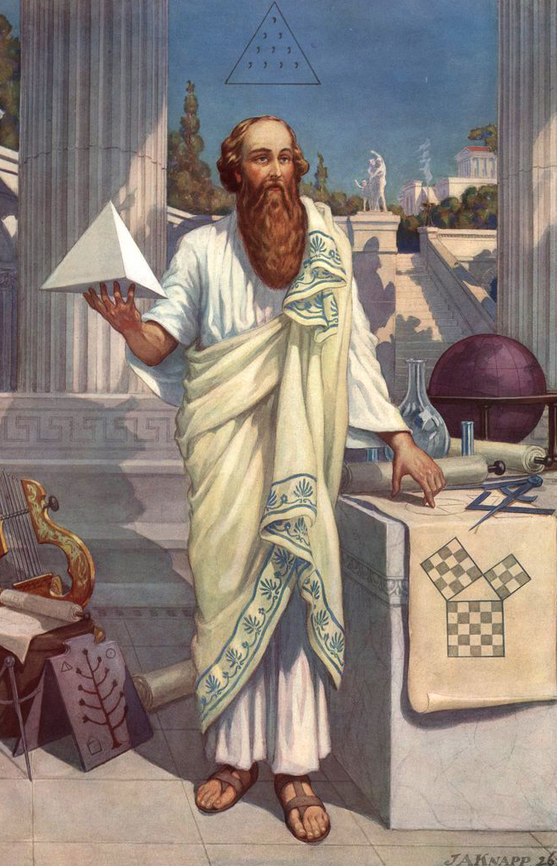
782.1 KB PNG
>Atheists are of three kinds.
>1. The mere stupid man. (Often he is very clever, as Bolingbroke, Bradlaugh and Foote were clever.) He has found out one of the axioms, and hugs it and despises those who see more than himself, or who regard things from a different standpoint. Hence he is usually a bigot, intolerant even of tolerance.
>2. The despairing wretch, who, having sought God everywhere, and failed to find Him, thinks everyone else is as blind as he is, and that if he has failed—he, the seeker after truth ! —it is because there is no goal. In his cry there is pain, as with the stupid kind of atheist there is smugness and self-satisfaction. Both are diseased Egos.
>3. The philosophical adept, who, knowing God, says "There is No God," meaning, "God is Zero," as qabalistically He is, that is to say, Ain Soph, thereby revealing his intellectual failure or dishonesty, either of which, mere stupidity.
>>
File: 1746514678132517.jpg (1.1 MB)

1.1 MB JPG
A universe is what a universe does.
If you look at the history of the universe, the biggest trend is an "increase in complexity," which is an increase in the significance of elements to each other, an increase in beauty, an increase in the kinds of interactions possible. For example in the early universe it was too hot and dense for atoms to form; when it expanded and cooled enough all the complexity of chemistry and stars emerged. The first stars forged the heavier elements, making rocky planets such as Earth possible, which made life possible.
This is of course a trend, not a guarantee, but in the long run the universe finds new ways to make itself weirder, forever grasping towards novel potentialities from the foothold of determined, past fact.
The Cosmos isn't at all like a machine, but is a creative process of creative processes - a community of co-creative entities of all kinds. To modify Sagan: we are a way for The Cosmos to create with itself, but as "The Cosmos" is short for "all of us," we are a way to create with each other.
Relationships are the foundation of reality, not the things-in-themselves of substance metaphysics. Change is the nature of all things and the metaphysical nature of change is expressed in one way as the fundamental theorem of calculus. The dynamic between integration and differentiation described is mirrored by a philosophical romance between being and becoming.
>>
>>
>>25053887
>Waiting on the empirical verification of the mind-at-large that he totally didn't just assert without evidence
You're making a category error. Empirical verification alone pertains to science. A metaphysics (such as invoking the mind-at-large) is definitionally beyond science. A coherent metaphysics obviously shouldn't conflict with science, but it doesn't live or die strictly on whether we have the means to falsify it.
>>
>>25053974
>matter is that which holds all information in the universe, but information is just whatever is graspable by the senses, the initial reply you discarded is basically it
you are once again stating things about it. I want to know a clear description about what matter actually is. What is it?
I don't care how you can grasp it and what informational field bullshit your theory is about.
What is matter. Make a definition. You're going around the subject without stating clearly "this is what matter is: ..........."
>>
>>
>>25054057
Source: https://ia800708.us.archive.org/28/items/simsane-9.1-vyrith/SiMSANE_9. 1_Vyrith.pdf
>>
>>
>>
>>
>>
>>
>>25054164
>so idealism is true because I'm conscious right now and I see no need to create another realm parallel to this conscious realm that is outside consciousness but instead creates the experience while being inaccessible to me and I state that I know this realm creates my and everyones own experience while never being accessible to anyone ever
ftfy
>>
>>25053950
>>25054181
The claim being made is that "matter" is fundamentally mental (or conscious) in essence. We are also conscious, but experience our conscious state as dissociated subjects. Ergo, there is a experiential distinction between ourselves and the external world. We still have agency (withon reason) and can exercise influence over how we as subjects interact with the world around us.
>>
>>25054192
>so materialism is true because I'm conscious right now and I see reality, which is external to my consciousness, because if there was no external reality then I wouldn't be conscious, since there would be nothing to be conscious of.
ftfy
>>
>>
>>25054245
>explain how
Sense-perception is an automatic (non-volitional) preconceptual awareness of external objects. Our conceptual faculty on the other hand is volitional and thus fallible.
>But what about optical illusions?
Those are conceptual errors, flawed interpretations of sense data, not an error in the sense data per se.
>But sense data is processed, that must mean it's inaccurate.
Just because something is processed doesn't mean it's invalid. Much like other non-volitional biological processes like digestion, the processed material must serve its function in order to sustain life. The function of the senses is to provide awareness of reality.
>What if our perception of reality is just a mental simulation that condenses information about reality into a simplified model?
This would effectively remove the distinction between our senses and our conceptual faculty. If the information we were receiving from our senses was heavily simplified, why would we then need to condense that information further into concepts? Shouldn't this optimized simulation already done all that busy work? This theory is redundant.
>Why should I trust the senses?
Because sense-perception is the foundation of all valid knowledge. To reject sense-perception is to reject all knowledge.
>>
>>25054245
He’s gonna retort with “no, my intellect/reflective cognition/wisdom/rational inference can show the reality behind what is presented by my senses!”.
Seen this argument a million times. When every single quantity that is presented here (logic, reason, our sense of rationality, wisdom, intelligence and whatnot) can be seen as arising from purely material biological, historical and cultural developments in the way humans see themselves, each other and the external world outside of themselves since the dawn of civilization, the idealistic proposition sounds unnecessary and almost begging the question in a desperate attempt to put humans and human thought and reason at the center of all material existence.
>>
>>25054311
>“no, my intellect/reflective cognition/wisdom/rational inference can show the reality behind what is presented by my senses!”.
>Sense-perception is an automatic (non-volitional) *preconceptual* awareness of external objects.
Guess you haven't seen this type of argument after all lol.
>>
>>25054320
Not really, you’d simply replied when I was making mine and the page hadn’t updated yet. I still don’t see why I should put senses on a pedestal when I don’t trust them. One needs a technique of clarifying sense perception to really test its reliability, and regardless of what kind of meditation I use I find that me, others, and even learned masters of it all disagree with each other. There is no strong reliability in it unlike the statements made by materialistic science, which uses non-sense data and inference as well as peer review and blind testing to be more reliable in its statements. I can not apply these to testing sense-perception’s validity.
>>
File: 1748386697556844.jpg (38.7 KB)

38.7 KB JPG
>>25053682
Cope and seethe
>>
>>
>>25054245
Are your senses not directed outward, to incoming data? Are you not oriented to look outward? To move around, thus indicating a space to move in? Why would you have vision if there never was anything to see? Why would you have hearing if there never was anything to hear? It is, at core, reasonable to infer that your sense data maps, at least to some extent, onto an external reality. Having made this inference, you can then operate to achieve goals successfully, thus verifying the inference.
>>
>>25054335
>I still don’t see why I should put senses on a pedestal when I don’t trust them.
How can you know to not trust your senses if you can't know anything?
>One needs a technique of clarifying sense perception to really test its reliability
If only there was an art of non-contradictory identification that could be used to validate your knowledge.
>There is no strong reliability in it unlike the statements made by materialistic science, which uses non-sense data
Could you clarify what you mean by non-sense data in a scientific context? Because empirical science is kind of reliant on observation, which requires the senses.
>and inference
Provided you're able to reduce the concepts you're using to the evidence of the senses, there's not a problem with using logic to reach new conclusions based on your observations.
>as well as peer review and blind testing to be more reliable in its statements.
I don't see how any of this doesn't rely on sense-perception.
>I can not apply these to testing sense perception’s validity.
The senses are a given because they are the standard of proof. To prove something means to reduce it to the evidence of the senses. This makes the validity of the senses self-evident.
>>
>>25054304
>preconceptual awareness of external objects
but you never sense external objects. you sense what your sense organs perceive.
>>But what about optical illusions?
>Those are conceptual errors, flawed interpretations of sense data, not an error in the sense data per se.
I'd say this is more proof that you never perceive the external object but what your sense organs perceive. Your eyes get the image flipped upside-down in the first place but we perceive it as "normal vision" (well most of us) because that's what you call normal vision and that's what you know for your entire life to be an image in vision.
>>But sense data is processed, that must mean it's inaccurate.
>Just because something is processed doesn't mean it's invalid.
it doesn't matter, you have no access to reality but your senses perception.
>>Why should I trust the senses?
>Because sense-perception is the foundation of all valid knowledge. To reject sense-perception is to reject all knowledge.
your senses have nothing to do with external completely independent objects. If you see a train way closer before the train makes impact with your body you have way more chances of survival than if you see the train accurately... the train is irrelevant as an incependent object for you.
>>
>>25054397
>you sense what your sense organs perceive.
Your sense organs don't have a mind of their own which they use to perceive and interpret reality. The mind uses the sense organs as a means of perception, what it perceives are external objects.
>I'd say this is more proof that you never perceive the external object but what your sense organs perceive.
Again, the mind uses the senses, the senses are preconceptual, they are automatic and mindless so they can't interpret data.
>Your eyes get the image flipped upside-down in the first place but we perceive it as "normal vision" (well most of us) because that's what you call normal vision and that's what you know for your entire life to be an image in vision.
How do you know that eyes do this if the senses are invalid? Eyes are themselves external objects.
>it doesn't matter, you have no access to reality but your senses perception.
And your senses are your only means of having awareness of reality. What you're demanding is the ability to perceive without any means of perception that could get in the way.
>your senses have nothing to do with external completely independent objects
You only know that there are independent objects because your senses give you awareness of them.
>Train autism
Maybe if you saw the train tracks accurately you'd never be in such a predicament in the first place.
>>
>>25054430
>The mind uses the sense organs as a means of perception, what it perceives are external objects.
Nope. The waves that your ears decode as sound are not sounds themselves, the colours are not part of the object you perceive but all you see and hear are colours and sounds. Just think about it, what you call objects are your perceptions. There is literally no bottle without your eyes to see it and your hand to move it, the bottle is particles, what the fuck are particles? quantum shit... what the fuck is quantum shit? we can't comprehend it because it's incompatible with our senses
>>
>>25054450
>we can’t comprehend it because it is incompatible with our senses
This makes sense when you look at it from an evolutionary perspective: we evolved to comprehend the macroscopic world, not the quantum world. Once could argue that quantum mechanics is still observed by our senses when quantum mechanics experiments are performed. But this is no different than simply taking a scientific observation, so I don’t get why senses are being elevated to such heights by anon.
>>
>>25054463
>so I don’t get why senses are being elevated to such heights by anon.
he wants to make materialism the default position and to put the burden of explaining mind as "obviously" being a product of material world which is purely independent from the mind
>>
>>25054450
>You only perceive the effects of reality acting on your sense organs, therefore your experience of reality is a creation of consciousness.
The causes that are acting on our senses exist externally to our mind, the resulting effect on our senses is thus dictated by reality, not our consciousness. All this shows that while our perceptions aren't primaries, they are still real.
>>
>>25054485
>>You only perceive the effects of reality acting on your sense organs
yes
>The causes that are acting on our senses exist externally to our mind
no, why would that be? you can't just state this without a reason.
>the resulting effect on our senses is thus dictated by reality, not our consciousness.
this doesn't follow from your reasoning. it's circular logic
>>
>>
>>25054502
>no, why would that be?
Because that's the mechanism of the senses, if there's no external cause then there is no way for the senses to produce any sensations.
>this doesn't follow from your reasoning. it's circular logic
It's basic causality.
>>
>>25054502
>no, why would that be
If the causes that create sensations in our senses do not exist outside of the mind, they are created within the mind. Then it follows that there is no world for you, only a mind, your mind, and your perceptions of everything, including us, is simply a closed circuit loop of mind making sensations and you perceiving those sensations. There is no real body for you.
>>
>>25054527
>Because that's the mechanism of the senses, if there's no external cause then there is no way for the senses to produce any sensations.
the mechanism of the senses is to see external reality? We are going back to the fact that your perceptions are not the external reality. How can something that happens exclusively in the mind be caused by something purely mind independent? anon, there are no sounds without ears to interpret the waves!!!!
>It's basic causality.
you're talking like we still believe Newton mechanics is the end of physics
>>
>>25054524
Because consciousness is the faculty that perceives existence. This means that existence precedes consciousness. If you insist that consciousness created existence, you are committing a stolen-concept fallacy, since consciousness depends on existence. Since existence existed prior to consciousness, it obviously follows that reality (which is existence by another name) is mind-independent.
>Can't consciousness be conscious of itself?
No. If there's no external content there's no awareness of anything. A consciousness conscious of nothing is a contradiction.
>I don't like your definition. >:(
Good luck finding another one that isn't just mystic psychobabble.
>>
>>25054549
>If the causes that create sensations in our senses do not exist outside of the mind, they are created within the mind.
I agree with this
>Then it follows that there is no world for you, only a mind, your mind, and your perceptions of everything, including us, is simply a closed circuit loop of mind making sensations and you perceiving those sensations. There is no real body for you.
No, I don't think this follows from the previous statement. There can be a reality external to you that is not mind-independent. You, the one who senses the external reality are part of that same reality so there is no need to say that the causes and the reality that is impacting your perception are completely external to you.
>>
>>25054553
>there are no sounds without ears to interpret the waves
And therefore the physical world disappears every time I do not observe it actively. Thus, the “physical” world is an illusion, simply a trick of the mind itself. The mind creates illusions, the sense faculties perceive the illusions, and so on in a closed loop. This means there is no body either, only mind and mind alone, specifically your mind alone.
>>
>>25054553
>the mechanism of the senses is to see external reality?
That's their ultimate purpose. But the actual mechanism is to be acted on by certain external causes which produce certain sensations which are then automatically integrated into percepts.
>We are going back to the fact that your perceptions are not the external reality.
The closest thing I said to that the mind uses the senses as a *means* of perception. I didn't say that perceptions are external reality.
>How can something that happens exclusively in the mind be caused by something purely mind independent?
By acting on organs that have the function of converting stimuli into sensation.
>anon, there are no sounds without ears to interpret the waves!!!!
Anon, there's no magic superconsciousness that existed before existence!!!
>you're talking like we still believe Newton mechanics is the end of physics
This has more to do with logic than physics.
>>
>>25054580
>Thus, the “physical” world is an illusion, simply a trick of the mind itself
can you say otherwise with good arguments?
>The mind creates illusions, the sense faculties perceive the illusions, and so on in a closed loop. This means there is no body either, only mind and mind alone, specifically your mind alone.
the self is also an illusion so I wouldn't say that
>>
>>25054581
>>the mechanism of the senses is to see external reality?
>That's their ultimate purpose.
so your eyes have the purpose of seeing how many trillions of atoms are in the cake before you buy it? that's kinda ridiculous anon
>>
>>25054599
So there’s not even you, only illusions upon illusions. Pure consciousness is the only thing that really matters. And there is no way to perform any empirical observations on this as subjective personal bias can never be reliably removed completely, so this can only be treated in the realm of speculation.
>>
>>
>>
>>25054610
Well, problem? I don’t find it ridiculous at all, as the brain filters the sense data and creates colour, hue, depth and other visual characteristics and has evolved to filter sense data that way instead of just giving me a mass of undifferentiated matter reflecting photons that the senses perceive initially.
>>
>>
>>
>>
>>25054637
Doesn’t matter, it can be treated via empirical observation and personal bias can be identified and removed via replication, peer review and blind tests, among many other techniques. It may never be perfect, but it is a hell of a lot better than denying everything and retreating to just idealistic speculation where twitter grandma Karen’s opinion matters just as much as yours in defining reality.
>>
>>25054645
>the point of the senses is to show you the opposite
The senses never directly “show” anything to you. The post-processing of the brain creates our perception of the world. Sense data is not accessible to us unless we experiment on dissected eyes or ears.
>>
>>
>>
>>
File: 1587313029773s.jpg (5.9 KB)

5.9 KB JPG
If this thread proved anything it was that Idealists are absolute faggots. Every claim they make about materialists is pure projection. The only reason they can ever win debates is because pop-science has misled the normies, which gives the fagdealists an opening to pretend that their voodoo nigger magic has scientific validity. I formally declare Total Idealist Death.
>>
>>
>>
>>25054066
To form a definition of thing A you just enumerate what things can be said of that thing A, that gives an outline, then you make a statement that is exhaustive about everything characterizing that particular thing you want to define.
A definition has for aim to describe all characteristics specific to a thing, and make sure it's not vague enough that you could apply the definition to other things.
With matter, there is no need to be more specific than "it is that which radiates observable stuff", that is matter, such a definition is good enough to exclude it from everything else, and to be able to point at matter in all occasions where there is matter to point at. The fact that modern models describe stuff as particles or waves adds absolutely no value to such a definition.
I'm not even sure how you can have the confidence to claim that this definition isn't enough, do you even know what standards the definition should reach? Do you know what you want? all you seem to repeat is that "it's not clear" enough, but for you to prove that point you'll need to come up with either a false positive or a false negative, to show my definition to be inadequate, show me either an instance where there is no matter but where my definition applies, or somewhere where there is matter and the definition is lacking, until then, until contradiction, the definition remains correct and finished.
>>
File: IdealistPopSci.png (42.5 KB)
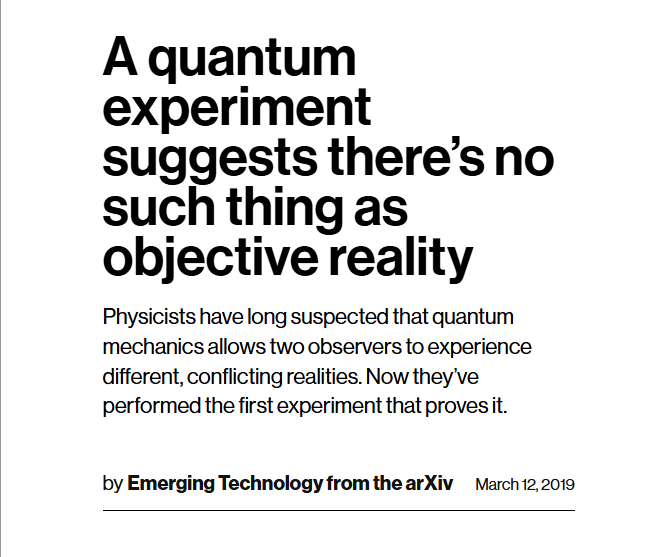
42.5 KB PNG
>>25054678
>https://archive.is/bhp5T
>>
>>
>>25054689
there is no idealism in science. It's a philosophical concept.
>>25054683
I can clearly define forks, bananas, bottles and a computer mouse. You'd say they are all material objects and that explains clearly the definition of matter somehow. That's not enough if you care about the subject and I do care about the subject and I find your lack of clear definition of matter to be unhelpful. I'll keep being an idealists because you give me no good reason to change my mind or even provide a good starting point of doubt to challenge my beliefs
>>
>>25054705
The subject is material, the mind is material. How do we know? All mental qualities can be explained largely by the actions of the material components of the brain or the historical/cultural/social development of humanity. The questions that still remain unanswered have a good hope that they will be answered at some point in the future, just as how questions that Newton had about space and planets were explained via new developments in physics. Newton appealed to the God of the gaps to fill in the incomplete information even though a materialistic explanation was scientifically determined later. Likewise, any unanswered questions of the mind within the materialistic framework have a good hope of being answered by new developments in neuroscience and empirical psychology, and we should be vary of trusting in “idealism of the gaps”. There is historical precedent for this, à la Newton.
>>
>>
>>
>>
>>
>>25054705
I have given your reason to doubt:
(me)
>OMFG IDEAS ARE JUST FUCKING NAMED MIND PATTERNS
It is backwards to give reign to ideas when their existence is owed to you noticing symmetry in what you can sense, matter is what you can sense, there is no way and no need to define 'matter' further.
But I'll play your way :
What are ideas? Give me a definition!
>>
>>

>>25053980
>useful
Like the Good?
>>
>>
>>
>>
>>
>>25055136
Like, if I'm seeing red, I'm necessarily aware of anything in the external world that has the property of redness. I could just be seeing red and that's the end of the story. There's no a priori reason to believe that phenomenal properties necessarily attach to the external world.
>>
>>25055037
Lmao if it’s not useful to them, change the language. Scientists use different notations, quantities, conceptual jargon and whatnot all the time even when conversing with other scientists, and laypeople are far more worse. There’s nothing magical in it, if it’s useful to communicate easily it gets used.
>>
>>
>>
>>
>>
>>
>>
>>25053021
>Non-material things are proposed ideas about other planes of existence which do not, in fact, exist.
Very contentious claim. The existence of abstract objects is a major debate in metaphysics. You can into problems very quickly if you deny that abstractions exist.
>>25053082
>Ideas only exist as electrochemical signals in a brain with very specific structures.
Is that true? The idea that ideas only exist as electrochemical signals in the brain is, in your account, just a set of electrochemical signals in your brain. The text that I see before me is just a set of pixels on my monitor. In what sense is that proposition 'true' if it's nothing but electrochemical signals, or pixels, or sounds, etc.?
>>
>>
>>25051447
>>25056203
>The idea that ideas only exist as electrochemical signals in the brain is, in your account, just a set of electrochemical signals in your brain.
Why did you employ the word "just"? When you are thinking, your thoughts are being processed by your brain using electrical signals and chemical reactions. Ideas are fundamentally a form of data processing, and we know this can take place with purely material components. As I alluded to earlier in the thread, information is literally material in a certain formation. Truth is in regard to how reality is, and if reality is a set of positions and characteristics, then that is what is true.
>>
>>
>>25055890
>materialism is relativity
Maybe that’s why instead of speaking in colours in science we use scientifically precise language that is often mathematical and directly tied to observational phenomena through frequencies. A scientist may change spoken language, but the physics remains the same. Layperson babble that results in relativism isn’t a concern here.
>>
>>
>>
>>25056464
>>25056687
Now, of course data processing as such can take place on a purely physical substrate. The question is whether and how these data represent anything in reality. When I talk about the idea of a tree, I'm not just talking about an abstraction that only has meaning in the context of some purely private thought process, or even in a conversation between two persons. The idea is /about/ something in reality. My idea of a 'tree' is not like, say, a variable in a computer program that doesn't represent anything outside of the program. I think that there actually are trees out there in the world; and I think that the things that I think, speak, or write about trees can point to propositions about actual trees, and these propositions can evaluate as true or false by virtue of how the world really is.
>>
>>
>>25056723
An arrangement of pixels lit up on a screen can "represent" something external to the screen and computer, but at rock bottom they are just coded diodes emitting light when a signal turns them on. You seem to be trying to imbue software with some kind of mystical property here, but it just doesn't make sense.
>>
>>25056791
>An arrangement of pixels lit up on a screen can "represent" something external to the screen and computer, but at rock bottom they are just coded diodes emitting light when a signal turns them on.
Taken at face value, this looks like a contradiction. Either the pixels on my screen represent a proposition or they don't. If the former, then great, we have a really existing nonspatiotemporal abstraction. If the latter, then in what sense do they represent anything true at all? And in what sense is the proposition, which doesn't really exist anyway, true?
>>
>>
>>
>>25056816
So the physical substrate (pixels on a screen) can represent a truth-apt proposition because it causally interacts with another physical substrate (neurons in the brain) that represents propositions.
Ah, mystery solved!
>>
>>
>>25054978
Yes, The Good. As Life, we are to prolongate our existence, that is the species' Telos, and the specie or the genes achieve their purpose by giving us a whole other one: happiness, reached by self-mastery & world-mastery, helped by aesthetic, knowledge, friends, virtue
But still The Good, as abstract, as concept, the form, is only the shadow of our true aim, our aim is the well lived life.
See the realm of ideas as 2D. Concepts are formed by removing individuality in things, on focusing on subsets of received data, they are shadows, projections of the real, and are inferior, from a power relation perspective, to the real, in the sense that Ideas serve Life, not the other way
>>
File: maxresdefault.jpg (89.5 KB)

89.5 KB JPG
>>25053566
Explain to me how this ever stops being Carbon, NOW!!!
>>
>>25055441
Honestly, I forgot what my argument was. Why do you even worship ideas as some kind of primary, I just don't get . . why are they trusted to be hidden beneath or above, to be only thought to be half-graspable "There are some things that we cannot speak of because we cannot sense and fully comprehend", I just don't get . .
when they are just this mere useful tool derived from seeing things occur multiple times, as they clearly are merely derived of sense perception and birthed by symmetry, then why are they believed to be so high and awe inspiring and confusing, I just don't get ..
>>
>>25056970
(continued)
I want to say another thing : matter exists, by definition
because if you look at the word 'exists' it just means to appear, to stand before the eye
And sure, ideas appear before your eye, your mind, whatever, but as I said, ideas "exists" only in being derived from sensed matter. They're reproductions of certain subsets elements that you've already seen, and deemed useful to reproduce because you've seen multiple times (symmetry), it's just dumb to me to say that ideas exist *before* matter then, or any statement saying something parallel to that
Is this what Schopenhauer meant by "World as will and *representation*" ? I haven't read him yet, maybe I should
>>
>>25054669
>If this thread proved anything it was that Idealists are absolute faggots. Every claim they make about materialists is pure projection. The only reason they can ever win debates is because pop-science has misled the normies, which gives the fagdealists an opening to pretend that their voodoo nigger magic has scientific validity. I formally declare Total Idealist Death.
They really are two sides to the same retarded coin.
>>
>>
>>25056889
>laughs in mathematicians having a definition for continuity and smoothness
Yeah, you know those “infinitesimal steps” are in fact used to show how abstract geometrical continuum can even exist, right? This isn’t even materialism or philosophy, it’s showing your lack of knowledge in math. Do you want me to summon the /sci/ eugenicist nerds here?
Pathetic, the philosophers of old held math in high esteem, yet you have forgotten freshman calc.
>>
>>25056988
I think it makes more sense if you use Camus’ argument against materialism. Briefly put, Camus argued that the materialist can never be sure, even with science, that the world is purely materialist. For an observer to be materialist and to apply it to perceived phenomena is to deny that the phenomena are observed in their full content; one is simply applying the materialist criterion to turn phenomena into what one thinks they are: material objects. They may entirely be material objects, but they also may not entirely be, and one is losing vital parts of phenomena by transcribing them as material objects.
This is problematic when you consider the nature of idealism: ideas can possibly exist independently of the physical world. No physical world is needed then for their existence, and they can be said to exist before the physical world even existed if the physical world has a beginning of any sort. Then, even the smallest amount of doubt in a fully materialistic world leading to an iota of idealism is problematic as it implies ideas are more foundational and possibly existed before the physical world. And thanks to the nature of science, we can never be absolutely sure that the world is completely and fully material.
This is a watered down version of Camus’ argument, so don’t deem it as you would with his actual words.
>>
>>25057117
>There's concepts that would have always existed so long there was one to consider them. e.g. 1+1=2. xyz on the electromagnetic spectrum = "red"
Sort of like how people say math is about discovering rather than creating?
>>
>>25057209
Yes, it would be related to the Platonic conception of knowledge as well. Knowledge of mathematics does not feel created or invented, whether to the middle school student or to the learned mathematician. Rather it is discovered. A new way of thinking about abstract objects, or new kinds of abstract objects, and so on. To a student learning a theorem or about a mathematical object, the theorem or object appears obvious. To the mathematician who struggled in his life to discover it, it is not so obvious, but rather a realization of “oh why didn’t I think of this earlier”.
It is the same with the physical world: new theoretical science is about new ways of conceptualizing the world. One must ensure the concepts are not contradicted by observation, but it always follows that the physical world is a particular form in a realm of mathematical possibility, much like the relationship between “particulars” and “concepts” in >>25054978’s pic.
>>
>>25057117
This can be turned on its head. Camus was criticizing Marx and Marxist materialism. If one considers that the existence of ideas can be explained even partly by materialism, then there is a possibility that materialism can fully explain them. If so, then ideas arise in the material world and cannot exist without them. While science cannot give absolute truths, ideas, even mathematical ideas, are simply statements true within rigidly defined conceptual systems. There is hardly any mathematical, philosophical or logical statement that one can say will be true forever and always instead of being supplanted by new statements that change its domain of validity.
>>25057209
>1+1=2
Sounds like an immutable concept until you ask what ‘1’ is. You can come up with a million ideas on what ‘1’ is, but I need only a single materialistic explanation: ‘1’ is an abstraction we have made as humans to denote what we think means a single material object, as opposed to two material objects and so on. Likewise, the boundary between an object and the surrounding, between red and the other adjacent colours, and whatnot have no absolute material boundary, but are simply conceptualizations of the world. Mathematics, philosophy, logic exists only in the material minds of mathematicians, philosophers, and logicians, and in the material books and other media or culture through which it is transmitted, and are simply useful abstractions for science, economics and other fields. The myriad possibilities of mathematical “realms” versus the particular physical world as anon in >>25057233 said simply exists in the same manner that a million artists can paint a particular bison a million different ways, but the particular physical bison is different from the paintings and all paintings arise from the presence and existence of the bison, not the other way around.
>>
>>
>>25057064
>Yeah, you know those “infinitesimal steps” are in fact used to show how abstract geometrical continuum can even exist, right?
It's funny how that isn't real either, but you mathtrannies don't deal with reality to begin with.
>>
>>25057315
>Sounds like an immutable concept until you ask what ‘1’ is. You can come up with a million ideas on what ‘1’ is, but I need only a single materialistic explanation: ‘1’ is an abstraction we have made as humans to denote what we think means a single material object, as opposed to two material objects and so on.
1 is just an idea that we came up with to denote the idea of 1, as to 2, which is an idea that denotes the idea of 2. These ideas, which don't describe anything in objective reality, are unreasonably effective for no particular reason.
>>
>>
>>
>>
>>25056959
You need a Platonism, a science of objectivity, to justify the claim that 'carbon atom' is a valid category to recognize. Just because it's sensible to you or me and useful for our purposes doesn't mean it is objectively set apart as a discreet thing different from the single blob of space.
>>
>>
>>25057545
In other words: Matter is an infinitely divisible canvas on which you can divide and categorize an infinite number of disparate 'worlds'.
Maybe I think that only molecules are real, atoms are an invalid subcategory to have in-between molecules and quantum particles. It's obvious! Can't you see it's self evident that "carbon atom" is merely an arbitrary excess of systematization?! My conventions reflect the objective world and I have no bias.
Literally what materialists (naive—see: retarded—realists) sound like.
>>
>>25055138
>Dude what if like, the things I see, are like not caused by anything, because things can like totally happen arbitrarily and without any cause dude.
Complete nonsense. Denying that our perception is the result of external causes acting on our sense organs to produce specific sensations is just an arbitrary denial of causality.
>>
>>
>>
>>
>>
>>
>>25057607
Perception is mostly in the brain interpretating and filtering a much more muddled sense input.
Animals who are colorblind don't have brain anatomy to process color as we do, it's as unimaginable to them as light is to someone born fully blind.
This is basic anatomy and brain science.
How we perceive the world, what we see and don't see, is something that arises due to our whole biology and predetermined by our dna
Tldr sight is in the brain.
This is also why robot autonomy, like self driving, is taking forever, because what's "obvious" to our 'millions of years of evolved instinctual heuristics' is pure chaos for a computer.
>>
>>25057762
>Perception is mostly in the brain interpretating and filtering a much more muddled sense input.
Perception is a preconceptual process so no interpretation can take place on the level of sense-perception. Also you're assuming that because data has been processed it must distorted and inaccurate in some way, this assumption is unwarranted.
>>
>>25057773
This isn't some outlandish speculation but basic neurobiology.
Replace your eyes, only eyes, with a random animal's and you would not start seeing the way that animal sees. Nor would you see the way you used to see.
Because sense is a holistic phenomena involving your sense organ and your brain
>>
>>
>>25057781
>This isn't some outlandish speculation but basic neurobiology.
Neuro-biology also relies on the evidence of the senses for verification. If the senses are invalid, so are all the theories that make that claim, a self contradiction.
>>
File: Yes.png (243.3 KB)

243.3 KB PNG
>>25057792
>>
>>25057781
Adding to >>25057781
Of course grafting human sensory organs on to animals wouldn't work, that's not the point being argued here. The argument is about whether or not the sensory-data we receive is from an external cause or purely internal constructs created by consciousness.
>>
>>25057842
*Adding to >>25057799
>>
Materialists don't know what matter is, just like idealists don't know what a representation is. Materialists assume matter is a thing in itself while idealists assume representations are things in themselves. Matter is a representation, and neither matter nor representations are things in themselves, for they are both object for a subject.
>>
>>
>>
>>
>>
>>25057556
Ah yes, all of science is relative because “systematization is arbitrary”.
They know that. They incorporate it into their theories. Physics allows for any region of the universe to be taken as “system” and the rest as “surroundings”. There is no hard boundary between the two, or any restriction on what can be taken as such. Atoms, molecules and the like can be seen as interconnected collections of subatomic particles, or as atoms, or as molecules, or as crystal units, and any higher order collection of the two.
The question of which systematization to choose is answered simply as that which allows for theoretical predictions. Trying to understand (i.e, make predictions for experiment) why metals behave the way they do using just subatomic particles is…not gonna help you significantly. A recognition of crystal units helps greatly.
The carbon atom is taken as a system as it is easier to describe it as it is and then add myriad interactions with other matter and energy via perturbations. If we could’ve described it using fundamental particles we would’ve, but the math is too complex.
The reason why we have this systematization is again, simply pragmatism. Make the math simpler, make the predictions easier to make for experiments. To do every calculation in physics starting from fundamental particles is a fool’s errand. And said particles aren’t the last word on the structure of material reality either, they are simply the ones we’ve observed reliably so far.
So the justification for the “carbon atom” as a valid category is not Platonism, it is simply “what makes calculations easier”.
>>
>>25057985
(continued)
This does not mean that there is no organization in nature. Subatomic particles attract and repel each other, and those that attract come together to form clumps that we can call “atoms”, which in turn form clumps we can call “molecules” and so on. Said clumps are stable and persist over time, and so one can make experimental predictions by treating them as atoms and molecules. If they weren’t, experimental predictions cannot be made by treating them as atoms. The mathematical modeling of physics relies upon what is mathematically possible (or convenient) to work with in order to explain experimental observations.
>>
>>25057985
>>25058000
you can make maths, physics and models out of anything. The question is what are those things we call things like the carbon atom. categorizing it and then creating a model proves nothing of what that thing actually is. materialism simply can't answer.
>>
>>25058008
Nah, the models describe reality insofar as they are consistent with experimental observation. You can make models out of any math you want, can it make testable predictions is the question. If categorizing it as atoms works to do so instead of using differential geometry and n-dimensional balls to describe carbon, then that’s the simplest model we can make à la Occam’s razor. Models describe reality if they describe scientific observations.
>>
>>25057985
There is no legitimate 'is', over and above any other of the infinite possible distinctions, without an ought to prefer it.
So if oughts are not objective and eternal, aka the Good and the Beautiful, then all categories are levelled and irrelevant by definition. They just 'are" like any random assortment of anything. Mere being is empty, indifferent, pointless.
>>
>>25058011
>can it make testable predictions is the question
you can't apply this to reality. reality is not a controlled environment, and even then physicist fail to calculate when there are 3 or more factors that impact the experiment.
>Models describe reality if they describe scientific observations.
scientific observations like what? math isn't a scientific observation, and physics only describes models so you are in a circularity of models of mathematics and physics that you have to perform experiments for in a controlled environment (so limiting the scope - like how do they make experiments to see what black holes are doing? it's all abstraction of models - they can't see or determine anything about that) you never get a description of reality but of models.
>>
>>25058019
>schizo babble
Unfortunately the scientists are concerned more with explaining experimental observation via the simplest model possible, which is why the models aren’t random but chosen according to observation.
>>
>>25058028
>reality is not controlled
Doesn’t matter, we work with what we can. When we can control it better, we can add the new observations.
>3 or more factors
Hence why having simpler models is needed, and why the math of physics takes the form it does.
>how do they make experiments to see what black holes are doing
This does not imply an abstraction, as physics does not know in a strict empirical sense what happens inside of a black hole. What happens outside can be described, has been observed, and continues to be observed, and is consistent with the theoretical predictions of black holes.
>>
>>25058035
>Doesn’t matter, we work with what we can. When we can control it better, we can add the new observations.
the process itself only shows you a limited description of reality. It can't and will never explain it or help you find any answers about the essence of what is there
>Hence why having simpler models is needed, and why the math of physics takes the form it does.
it takes that form because it can only describe models that humans create for their purposes
>>
>>25058049
Camus’ criticism of materialism is validated here, see >>25057117. Ultimately even scientists are simply observers and all scientific empiricism must start from the fact that one is necessarily hypothesizing that the world can, for scientific purposes, be studied in a materialist manner. This makes any claim of ideas having their foundation in matter due to scientific discoveries about the brain or culture nonsensical as that was already assumed by the scientist before any observation is made.
This means that an idealist foundation of the apparent physical world can never be scientifically denied, as there will always be doubt. Even an iota of doubt, an iota of idealism, is sufficient as it can exist without the material world and even exist before the material world itself.
>>
>>25057117
>Camus argued that the materialist can never be sure, even with science, that the world is purely materialist.
That's called "begin honest". Name a position that does not admit to the possibility of being wrong and I'll show you a moron or a liar.
>>
File: moore.jpg (139.4 KB)

139.4 KB JPG
>>25058466
I have hands.
>>
>>
It's neither. We'll never know how things actually work. No afterlife would be terrible, but at the same time, an afterlife (of the realistic or naturalistic kind, and not overly optimistic NDE schizophrenia) would also be terrible and probably even more painful than what we're experiencing now.
Not much to do, we're just fucked in general. Oh well, back to jacking off to big anime tits.
>>
>>
>>
>>
>>25058049
The limitations in description are already known by scientists, they will tell you about them more accurately and they strive to improve experiments so that they can overcome those limitations. As for humans making materialist assumptions when performing science, such assumptions are needed in order to replicate findings and have the possibility of falsification when studying the world. Ideas have little to do with the principle of falsification, and one ends up with pure speculation.
>>25058466
This. Idealists seem to want absolute truth when at best all we’ll ever get is improved measures of reliable knowledge. And speculating about ideas is hardly reliable when you come with such lovely phrases as >>25057430:
>1 is an idea we came up to denote the idea of 1
what the actual fuck is this supposed to even mean
>>
The things about his philosophy aren't much different from just neutral monism, but then he also claims things that are just either blatantly false or at least don't follow from his arguments.
He just claims that physicalism can't explain something like the placebo effect, which seems completely false to me. The placebo effect is easy to explain under physicalism if consciousness itself could be physical.
Then the unproven things are things like unity with the external mind after death, I think that's what people actually like about him, it's really just the hope for an afterlife for people who for whatever reason can't believe in Christianity.
>>
>>
>>25058727
If consciousness, say your consciousness (wholly physical), could be even hypothetically replicated by a sufficiently advanced computer, then it also follows that hypothetically purely natural processes could replicate your consciousness. You are already born in a human body, so it is possible for nature to replicate it. Now, supposing that your consciousness was regenerated in some other organism in one of the millions of planets amidst millions of years, will it be you? Is the consciousness replicated by the computer you? If you think that a computer can do it, then nature can.
This is one of the ways a completely physicalist reincarnation can occur. One needs no idealism or religion for believing in an afterlife.
>>
>>
>>25058672
You should read "The Problems of Philosophy" where Russell emphasizes the importance of taking into account that you might be wrong and instead of staking out a definite position, being able to build a case for a particular inference being reasonable.
>>
>>25058727
>Then the unproven things are things like unity with the external mind after death, I think that's what people actually like about him, it's really just the hope for an afterlife for people who for whatever reason can't believe in Christianity.
Atheists want the afterlife to be fake because all of their metaphysics stem from the single assumption division and exclusion is the sole rule of reality.
>>
>>
>>
>>
>>25058754
No one with a qualia could ever write this
By that logic my self awareness ought to be able to be replicated right now in another body and I should become aware, as one subject and one self, in two bodies at the same time.
>>
>>25059850
The Buddhists have 0 problem asserting such beings can, in fact, exist, even though none of them are human. But then again for them any consciousness will result in qualia through dependent origination, so…
>>
>>25059837
Definitely not the typical conception of soul as there is no restriction on how much consciousness can change during a lifetime, and the “reincarnation” preserves very little if anything at all of personality and memory. At some point seeing it as a soul gets you into the Ship of Theseus problem, so you might as well abandon the concept.
>>
>>25058754
this is not reincarnation. You need the universe itself to repeat in a pure materialistic universe, it's the eternal return thought experiment by Nietzsche.
it's not afterlife, if you are purely material, then this right here right now is everything that you will ever be, in any form
>>
>>
>>25060678
This assumes that consciousness must be replicated (read, cloned) perfectly in order for reincarnation to occur. It is highly likely this is not so as all mental qualities, consciousness included, change during one’s lifetime but one retains the same existence barring pathological conditions. What is more likely is that consciousness has certain material parameters that can vary within a range allowing room for variability during a lifetime, and as long as another consciousness is formed naturally at some point in the universe after death that is within that range, it is the same consciousness.
I see no reason to believe that perfect replication is needed.
>>
>>25060839
but if materialism is correct then you are a specific material pattern and nothing else. otherwise you imply some sort of dualism where you could be the same consciousness but with a different material structure
>>
>>25060911
This isn’t an issue with materialism, but rather what constitutes identity. What makes a human a human? One could go into all of the biological data, but human populations have variation in traits. Therefore, all of the biological data must be in ranges and spectra accounting for the variation.
Consciousness too changes and varies along with other mental qualities in one’s lifetime, thanks to material processes and changes. Yet you do not lose the fact that you’re conscious unless there is disease or death involved. Therefore, the material parameters (read brain and body characteristics) of consciousness can vary within a range. Any natural process that produces an organism capable of supporting a consciousness with material parameters within your range will then necessarily recreate your consciousness. The material pattern itself exists in a range of variability, it is not fixed throughout your lifetime.
This goes back to science, where two measured quantities are equal if they are within their range of variability, their error.
>>
>>25061090
>Any natural process that produces an organism capable of supporting a consciousness with material parameters within your range will then necessarily recreate your consciousness
but how could that be? if you have a twin brother that looks exactly like you and behaves exactly like you and you live in the same place and basically let's say you and him live exactly the same life, would you say that you and your twin brother are the same consciousness? that's not true. The same-ness of conscious beings don't create personal intrinsic experience of the beings.
>What makes a human a human? One could go into all of the biological data, but human populations have variation in traits. Therefore, all of the biological data must be in ranges and spectra accounting for the variation.
but the question is about personal identity, about that one experience of being you in particular. you have to make sense of why you are you and not someone else
>>
>>25061131
This is the reason why it’s a hypothesis. We know about our bodies minus the brain, but when the brain is involved there’s a whole lot we don’t know. Does consciousness require the same brain? Is the range of variability so narrow that only one neural architecture can support it? Or is the range large enough that a sufficiently advanced computer can recreate your consciousness? And even if so, is that consciousness “you”? I have referred to material brain parameters and their variabilities, but none of them are recorded in science yet as it is incredibly difficult to study consciousness in a materialistic manner. This is a hypothesis and a possible theory at best, but it is hardly scientific knowledge or consensus.
>>
>>25061165
>This is the reason why it’s a hypothesis.
but you don't have to make that hypothesis, we already know it doesn't work like in the twin example. the twin fits the complexity, varies, is also confused about his own personal identity... what do you add in the hypothesis to explain the logic of a materialistic reincarnation/afterlife? I think the only way is Nietzsche's idea
>>
>>25061203
The problem with the twin example is that we don’t know enough about the brain to understand how to exactly make things identical. That’s really it, that’s why it’s a hypothesis. We can control for genes, life history, parenting and everything for these twins, but we cannot rule out that there may be qualities of the brain and its its development that we aren’t controlling for. The human brain is complex, arguably the most complex piece of matter in the universe we have discovered, and current science can only reliably model the brain of C. elegans, a worm.
>>
Aristotle BTFO'd Idealism in the first book of the Metaphysics.
>Positing ideas as the cause of sensible beings is the same as if one were to count an indeterminate amount of things, and unable to count them, were to addition more things believing it will help him count them
kek
>>
>>
So many replies, not a single one that is convincing me of materialism’s truth. Most of it is circular reasoning from science, some admitting to foundational ideas but not realizing it, and all of it devoid of anything valuable.
>>
>>25061730
>This is exactly what math does with its treatment of infinity in its different forms. Are we to dismiss math now?
Potential infinities are not actual infinities.
>>25061850
>So many replies, not a single one that is convincing me of materialism’s truth.
Why should anyone care that some random pseud faggot is too up his own ass to admit his sophomoric philosophy is retarded self-contradictory niggerbabble.
>>
File: Rodney Dangerfield.jpg (18.9 KB)

18.9 KB JPG
>>25062681
>Why should anyone care that some random pseud faggot is too up his own ass to admit his sophomoric philosophy is retarded self-contradictory niggerbabble.
But enough about materialists.
>>
>>25061850
Read "The Problems of Philosophy" by Bertrand Russell. He builds his case from the ground up, like Descartes, and is firmly rigorous the whole way, differentiating sense itself and sense data, and then making the case for what are reasonable inferences and what are baseless assertions.
>>
>>
>>25060710
It is entirely possible to practice science as an idealist, in fact quite a good deal of practicing physicists that I’ve read and expected to be materialist end up taking the Platonic view of science, surprisingly.
>>25065634
His neutral monism was always interesting to me, though I prefer idealism.
Can’t really take a lot of materialism seriously when they assert that the sensations arise from physical objects outside the senses in a physical world. This is all fine and great until you ask what those objects are made of and get quantum field theory:
>universe has fundamental fields that give rise to the fundamental forces present all across spacetime
>these fields manifest themselves as energy particles of different kinds
>these energy particles in turn manifest as particles of matter, light, and electricity
>have many of these scatter on a detector of some kind and a measurement can be made
Not doubting any modern physics, this is all valid science. But would a Platonist from the first century not take one look at the “fundamental fields” that cannot be observed directly but only dealt with by use of mathematical reasoning, and see them as no different from Platonic forms? At the foundation of every supposed material object lies a phenomenon only tractable by use of math and reason or by observation of its highly indirect side effects on the world, no different from a Platonic form creating particular phenomena in the physical world that are available for us to observe.
The founders of quantum mechanics anticipated this conclusion and wrote about it leading to idealism.
>>
>>
>>
>>25065723
Seems like an exercise in semantics at that point. You want a field to be an idea or "Platonic form" rather than a material principle, but why? What does it change, what does it achieve? Why does it feel more attractive to you as a proposition? Is it just a matter of taste, or do you think there is some quantifiable difference between the two?
>>
>>
>>
>>25066163
Infinity, when used in math, literally means "not specified", thus it will cause an error in every equation where it is not either canceled out or subsequently specified. Is this still going over your head?
>>
>>25066168
>Infinity, when used in math, literally means "not specified"
this is not true. infinity can be a cardinality, it can be shorthand for a limit being unbounded, it can be used in normal arithmetic with certain rules for multiplication and addition, etc.
>>
>>
>>
>>
>>25066201
If by "not specified" you just mean "not a real number", then you're correct, but when a limit equals infinity it has a precise meaning, the same is true of infinite cardinalities. Look up the extended reals and you will learn that infinity does not cause an error in every equation where it is not canceled or specified. It sounds like you have very limited experience with mathematics
>>
>>25066153
Material “principles” don’t exist, you have material objects, matter and energy, and that’s it; principles are not material. Fields are simply not material, the commutators of quantum physics are not, the indeterminacy principle is not, and the operators and operator relations are not. These objects have no mass and no measurable work capacity, so they fail the physical definition of both matter and energy. They are neither matter nor energy by the definition of physics, and thus cannot be called “material” if you want to be consistent with science.
Platonic form does not mean “magical thing here”. To put it very *very* simply, it means there exist principles, mathematical or not, that capture material objects’ behaviour. Said principles are independent of material reality, and the principles exist in the same manner that Pythagoras’ theorem exists, in a non-physical manner; they are not simply models of reality but underlie reality itself. It is important to acknowledge when we are dealing with abstract objects and when we are dealing with physical matter and energy that can be observed and measured, and if the abstract objects (like fields) underlie all physical phenomena, then this is not a matter of taste at all but simply being honest that one cannot insist upon absolute materialism where math and principles only exist in the physical minds of scientists and in the media they are recorded on.
>>
>>
>>
>>
>>25067668
We may have observed quantum fields directly in the form of vacuum energy via the Casimir effect. It’s still not known if vacuum energy was the direct cause of the effect, but it’s theoretically possible. Other ways of observing include precise measurements of the cosmological constant and universe expansion rates. Quantum fields are directly observable and not some abstract construction that is impossible to observe in theory. Absolute materialism, as you put it, is still valid.
>>
>>25067668
What are you babbling about? Material does have properties, obviously, whether you want to call them "principles" or not is irrelevant. A field is just a pattern of properties in material. The field only exists in so far as it is expressed as a property of a set of material. There seems to be this extreme denial that patterns, that material in specific formations, are actually still just material. I don't understand why you feel the need to appeal to something outside the material to explain what amounts to a formation of material.