Thread #28828995 | Image & Video Expansion | Click to Play

File: file.png (748.3 KB)
748.3 KB PNG
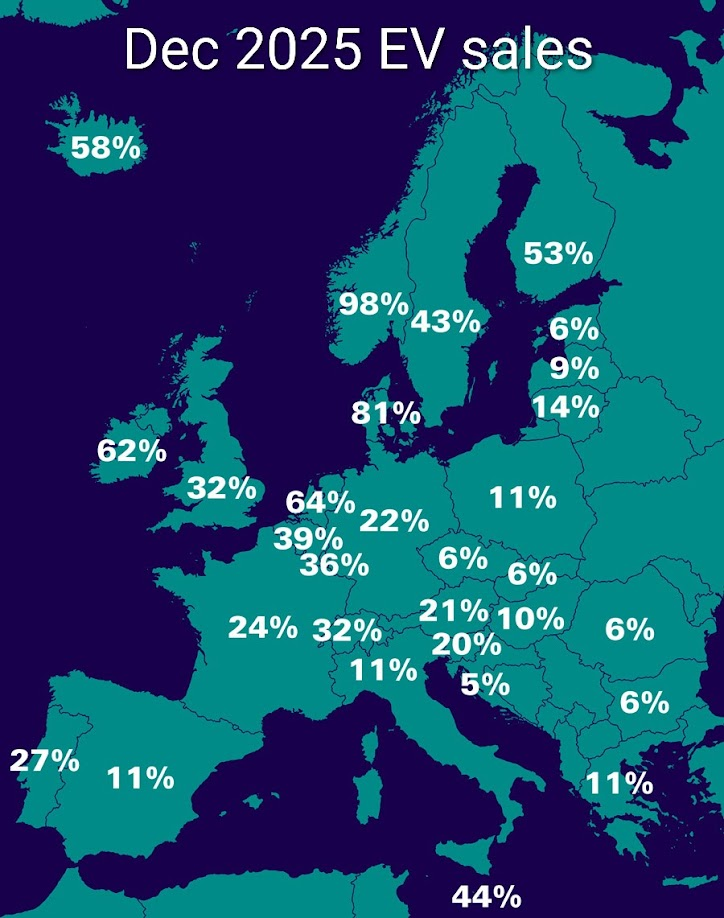
Every country shown here will be 100% within ten years and there's nothing you can do about it.
65 RepliesView Thread
 Showing all 65 replies.
>>
>>
>>
>>
>>
>>
>>
>>
>>28829037
And, a lack of sufficient electrical production or distribution.
There is a lot of work to be done to simply support the implementation of EV's, all we're seeing is the forced acceptance of EV's that will be severely limited in their range and usefulness simply because the power grid cannot support them.
>>
>>28829070
>all we're seeing is the forced acceptance of EV's that will be severely limited in their range and usefulness simply because the power grid cannot support them.
Are you implying that manufacturers are putting smaller batteries than they otherwise would, because they don't want the electricity grid to collapse?
>>
>>
File: 1769871781773277.gif (821.5 KB)

821.5 KB GIF
>Still trying to act relevant when they are mogged by America, Russia, and China with actual militaries and sizable nuclear capability.
>>
>>
>>28829094
The same russia that got stuck in Eastern Ukraine? The same America that had to ask for help from European countries in Iraq and Afghanistan and still lost? The same China that hasn't really fought anywhere in almost 50 years?
>>
>>28829096
Perceptions of masculinity or sexual orientation derived from vehicle purchases.
>>28829100
>ask for help from European countries in Iraq and Afghanistan
KEK imagine believing this
Face it, the age of Evropa has been over for more than 70 years.
>>
File: images.jpg (7.3 KB)

7.3 KB JPG
>>28829096
I could run pic for a month on one overnight charge but I cannot legally charge it at home.
My wagon was bought with the intention of making it to 2040+.
>>
>>28829105
>Perceptions of masculinity
Perception of masculinity for European men is almost the same as for young black American men: how many side pieces you can juggle without your main hoe (or each other) finding out.
>>
>>
>>28829074
No, rather that the grid as is will not be able to support the demands of an all EV fleet.
It's not just in Europe, the Americas have a long way to go before the distribution infrastructure can support the complete switch to EV's many are proposing.
>>
>>
Sales of pure electric vehicles in the EEZ (EU+UK+EFTA) increased by almost 30% YOY (~2.59 million in 2025 vs ~2 million in 2024). They constituted about 20% of total vehicle sales (~13.27 million) in the EEZ. Total vehicle sales were up 2.4% (~310k units) compared to 2024.
>>
>>
>>28829015
And the people have the audacity to claim it's not subsidized by the state lmao. Norway has some good stuff for car culture, but holy shit is it largely the most cucked country on earth for getting into cars.
>>
>>28829094
>Europe is not relevant
>meanwhile, Apple had to give up billions in lucrative licensing fees by adopting an open charging standard
When Europe is 100% EVs and their oil usage drops, and the oil producers in the USA will shut down due to demand collapse, I'm wondering if all the laid off employees will go home and talk about how Europe is irrelevant.
>>
>>
>>
>>
>>
>>
>>
>>
>>
>>28829141
Someone said the grid wouldn't be able to support an all electric vehicle fleet. I'm asking how Norway did it. What the hell does taxation have to do with it? Did they use the taxes to rebuild their electricity grid?
>>
>>
>>28829147
Yes, Norway heavily upgraded and adapted its electricity infrastructure and grid to accommodate widespread electric vehicle (EV) adoption, rather than simply relying on the existing system. This involved extensive investment in, and modernization of, the power grid, along with the rapid deployment of a comprehensive charging network.
Infrastructure and Grid Upgrades
Grid Modernization: While Norway’s grid was already robust due to high electricity consumption for heating, the country invested heavily in upgrading transformers and cables to handle increased load, particularly at the local level.
Smart Grid Technology: Norway implemented smart control systems to manage the increased electricity demand effectively.
Home Charging Prioritization: The vast majority of Norwegians (around 82%) charge their EVs at home. Regulations were introduced allowing residents in apartment buildings the "right to charge," facilitating the installation of chargers in housing cooperatives.
Rapid Charging Network: To eliminate range anxiety, Norway established a extensive fast-charging network, with at least one fast-charging station every 50 kilometers on major roads. By 2024, there were over 5,600 fast-charging stations operational.
Key Factors Enabling the Transition
Renewable Energy Power: The charging infrastructure is supported by a grid that runs on roughly 98%–99% renewable energy, mostly hydropower.
Government Incentives: The government provided subsidies to housing associations for charging infrastructure and funded the development of chargers in remote areas.
Proactive Planning: Norway began planning for high EV adoption early, with policies dating back to the 1990s, allowing them to build out the necessary infrastructure in tandem with rising sales.
>>
>>
>>28829159
The U.S. electricity grid can support an all-electric fleet with moderate, targeted investments in infrastructure, particularly by utilizing off-peak, overnight charging to manage demand. While a full transition could increase total electricity consumption by 14% to 39% by 2035, studies suggest this can be managed through grid upgrades, improved forecasting, and smart charging, rather than requiring a total overhaul.Key Considerations for Grid Support:Capacity Increase: A 100% electric fleet would likely require an additional \(18\%\) to \(25\%\) in total annual electricity generation.Strategic Charging: Charging vehicles overnight or during off-peak hours allows the existing grid to handle the increased load.Investment Needs: While "moderate" is subjective, investments are primarily needed for local distribution, such as upgrading transformers, rather than just building massive new power plants.Potential Bottlenecks: Localized, residential, and grid-edge infrastructure (transformers) may face strain before the overall generation capacity.Long-Term Shift: Because the vehicle fleet turns over gradually (over roughly 15–20 years), the grid has time to adapt, with yearly demand increases likely to be manageable.Proactive planning, including better data modeling to predict, charge-location needs and, in some cases, upgrading to higher capacity, can enable this transition while maintaining reliability.
>>
>>
>>28829164
Norway’s per capita energy consumption is significantly higher than the European average, driven by a high demand for electricity in residential heating, a large energy-intensive industrial sector, and a climate that necessitates higher energy use. As of 2024, Norway's total primary energy consumption per capita is approximately 85% above the average for European countries.
Key Comparisons (2024–2025 Data)
Total Primary Energy (per capita): Norway is estimated at 4.76 toe (tonnes of oil equivalent) per capita, compared to a much lower European average.
Electricity Consumption (per capita): Norway is among the highest in the world, with consumption of over 23,000–24,000 kWh/year, which is over three times higher than the average EU household consumption (approx. 6,000–7,000 kWh).
Energy Intensity: While Norway consumes more total energy, its power sector is nearly fully decarbonized (98% renewable), resulting in a carbon footprint per capita that is roughly half the global average.
Reasons for Higher Consumption
Heating Needs: Due to its cold climate, residential energy consumption for heating and hot water is exceptionally high.
Industrial Demand: Norway has a high concentration of energy-intensive industries (e.g., aluminium, metals, chemicals) that rely on electricity.
Low Electricity Prices: Historically, low-cost hydropower has encouraged high electricity use in both domestic and industrial sectors.
Comparison with Nordic Neighbors
While Norway has higher per capita usage than the overall European average, its consumption trends are similar to other Nordic countries, which are all leading in high electricity usage due to climate and industrial factors, often seeing rates 8% to 16% higher than other European neighbors.
>>
>>
>>28829162
>Localized, residential, and grid-edge infrastructure (transformers) may face strain before the overall generation capacity
This is glossing over the age of infrastructure when one gets much away from urban centers.
Especially in older suburban areas, where you will find distribution and homes dating from the immediate postwar era, with much of it's core wiring similarly dated.
>>
>>
>>28829166
All you had to post was the following-
>The annual electricity consumption was about 26-27 MWh per inhabitant during 2004-2009 when the European union (EU15) average in 2008 was 7.4 MWh. Norway’s consumption of electricity was over three times higher per person compared to the EU 15 average in 2008.
>>
>>
>>
>>28829123
grid infrastructure is part of it. we live very spread out here, and everyone can charge their ev at home or at their cabin. gas stations has always been far between.
>inb4 tax
its emission tax, no emissions no tax simple as.
>>
>>
>>
>>
>>
>>
>>
>>
>>
>>
>>28829207
not true. people drive a lot more here than cityfags think. i personally work within a 3h radius (or more) and usually just get an airbnb if its getting above 2h. not that i need to, im no ev driver. last big project i was on the electrican came from lillehammer to fosen in an id.buzz. he did so with one 30min gas station charge while he ate a hamburger. thats a 7 hour drive and would require atleast a hamburger even when driving diesel, you can however do it without refueling.
i have on several occations driven trondheim-stavanger-trondheim for work (15h each way), and i know many who does the same up north.
>>
>>
>>
File: jvowu13u9u5d1.jpg (11.3 KB)

11.3 KB JPG
If I was rich, I would probably cover my house with solar panels and daily an EV but I'm not so Im going to take my shit box to the grave
>>
>>
>>
>>
>>
>europe
who cares, most people with a brain and some balls immigrated to america over a century ago, the rest died in WW2. there's not an ounce of testosterone left in that entire continent, they're being conquered as we speak. there will be another WW2 level event that will burn that entire feminized shithole to rubble and then we'll come in and buy it up cheap. you'll all be federated territories of the US before you're dead and there's nothing you can do about it.