Thread #16903919 | Image & Video Expansion | Click to Play

How do I get a reliable understanding about a subject? Anonymous 02/02/26(Mon)11:13:18 No.16903919 [Reply]▶
File: pp.png (37.4 KB)

37.4 KB PNG
I try to search about a specific subject (ex.: the effects of X on Y), and I come out with something like thousands papers. Am I supposed to analyze them all?
5 RepliesView Thread
 Showing all 5 replies.
>>
>>
>>
File: 273712702_506910440792283_4480420532668109718_n.jpg (123.1 KB)
123.1 KB JPG
>>16903919
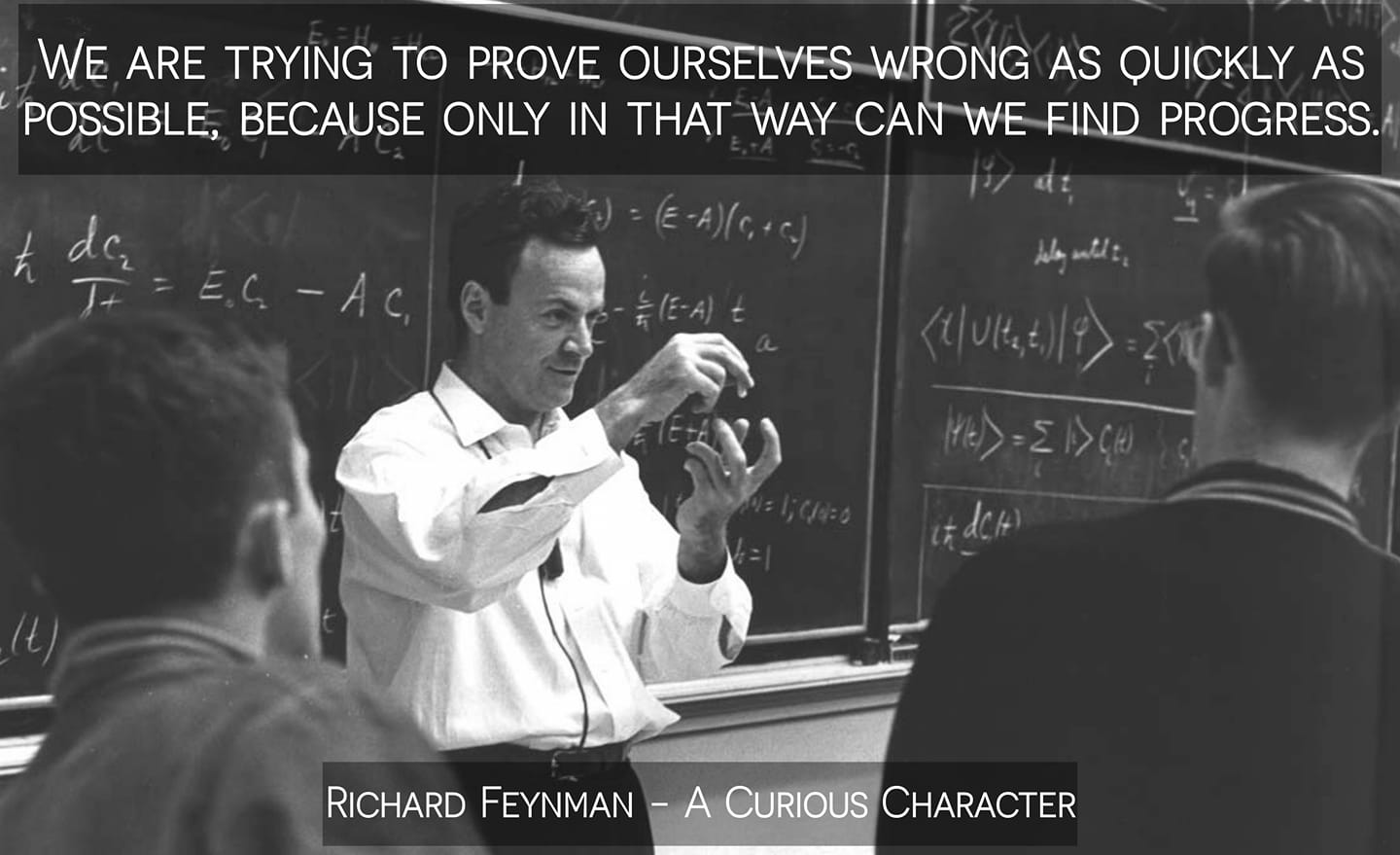
Grind. Throw darts at the dartboard and see what sticks. Read read read, try to remotely grasp whatever you can. Then go back to the beginning and read again, and with the things you've learned since you can understand the fundamentals better.
Don't try to form any beliefs, don't try to confirm, form ideas that can be challenged, and by challenging them you learn more. Assume that you can never truly 100% know something, you can only, say, know it with 50% certainty. You "attack" the 50% uncertainty and look for any flaws in your ideas, you make a new idea without those flaws. Now you have 60% certainty, so you attack the remaining 40%. You get to 90% certainty, 92%, 93%, 93.5%, 94%, 94.1%, 94.2%, 94.25%, etc.
You never let yourself think you've reached 100%, because then it's game over. You stop learning, you stop looking, you become invested in your idea and you will do everything to try to tell yourself and others that it's right. And if you don't know you're wrong, you'll never know it.
>>
>>16903919
Generally if you have to ask this question you an just chuck the first paper into chatGPT and let it crunch it down to 5 bullet points that you can then ignore and continue with the belief you had before you started gathering information.
If you are actually trying to learn you just you know read the papers until you are confident enough in your wisdom about the topic to determine which papers are about the subject that you are truly interested about and thus help you refine your search. This has challenge level:impossible
>>
>>16903919
Start with the basics. As in very basics.
Depending on the field, and just how green you are to it, there's some elementary shit you were taught in grade school that you immediately forgot after you passed the test. That's how basic we're talking here. This is before you should even be looking at a proper scientific research paper.
Focus your studies on understanding the core fundamentals while staying the absolute fuck away from anything "groundbreaking." Watch some normie-tier videos that give oversimplified normie-tier explanations. Then come up with follow-up questions that you can use to dive deeper. Rinse and repeat.
Most importantly: humble yourself.
You are not unique or special. You're some guy who's at least vaguely curious about the topic. That's how all the experts started out. The difference is they dedicated years of their lives studying this one subject and incorporating that as part of their identity. You're not even out of the kiddie pool yet. It will take you at least as long as them to gain anywhere near the knowledge and understanding they have.
If something isn't adding up to you, it is far more likely that you're missing something than it is that you have some sort of brilliant insight that went over these people's heads over the years.