Thread #97463158 | Image & Video Expansion | Click to Play


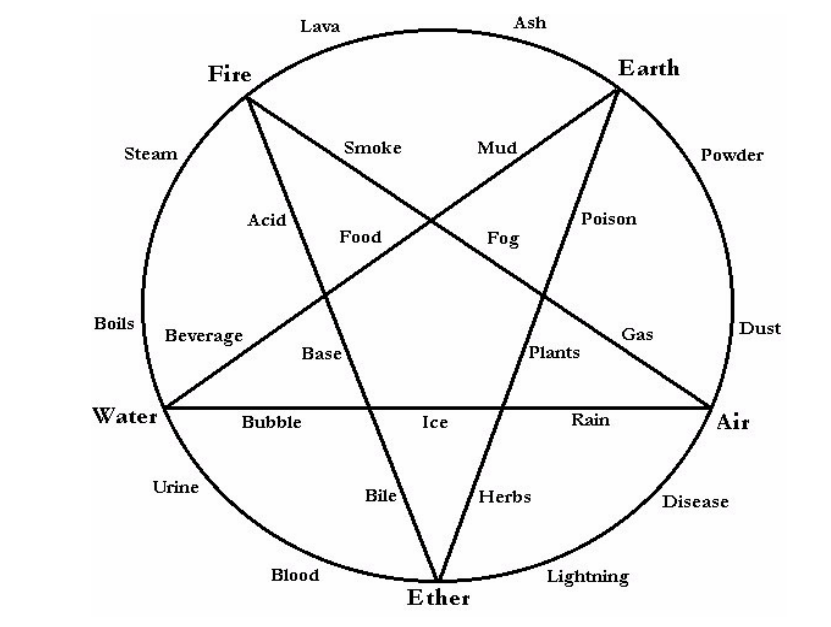
What are your preferences for how elemental spells, abilities, and/or beings/creatures are handled in your games and/or settings? How would you advise someone on the best way to create an original elemental system for a game and/or setting in general, both mechanically and/or narratively? And after the stock answer of Avatar and its RPGs, what's worth looking at for ideas/inspiration? If you have any great elemental images that's fine too!
44 RepliesView Thread
 Showing all 44 replies.
>>

>>

>>

>>
>>97463158
What secondary abilities/kinds of spells do you like to give mages of each element outside of manipulating the physical element itself? I always liked combustion benders in Avatar being able to blow stuff up at a distance, just for me.
>>
>>
>>97463158
>original
Aside from the fact that isn't possible anyway given the way inspiration and creation works, the best way to go would be to at least use something other than the generic four-pronged air/earth/fire/water or five-prong earth/fire/metal/water/wood (or air/earth/fire/lightning/water).
>>
File: Periodic_Table_2834904.gif (164.3 KB)
164.3 KB GIF
>>97463158
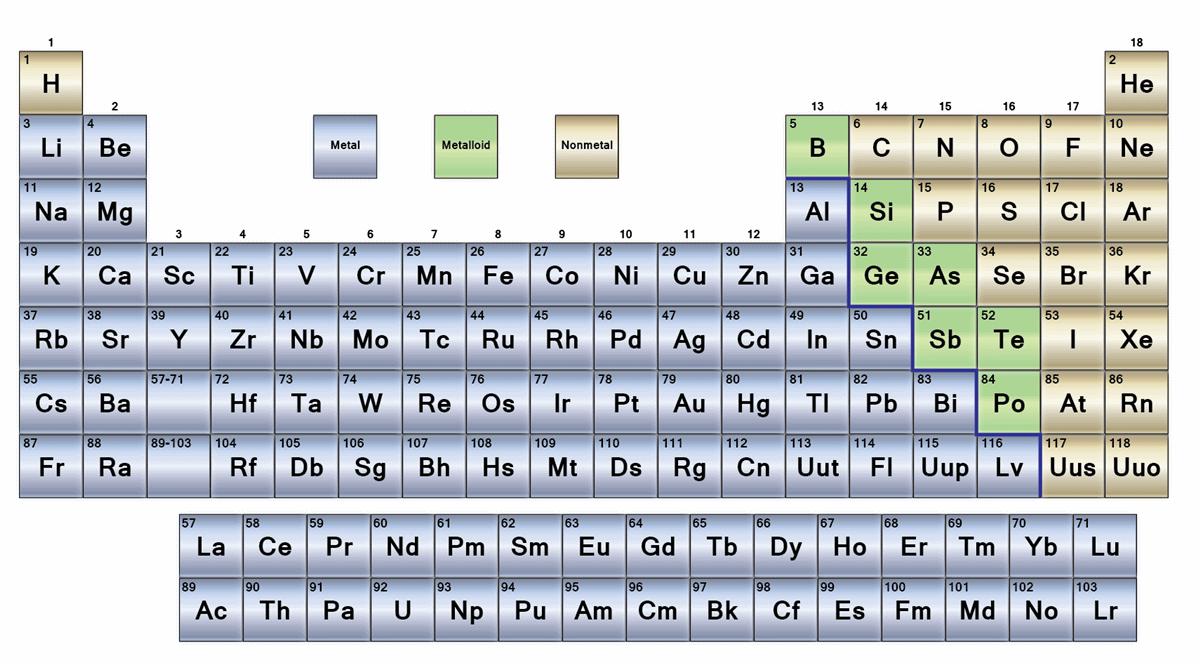
How do you reconcile elemental magic with the periodic table of elements? Especially in urban fantasy settings and the like. I tend to prefer it being symbolic of the four states of matter, do you have a different approach?
>>
>>
>>
>>
>>
>>
>>
>>
>>
File: elements.png (154.1 KB)
154.1 KB PNG
>>
>I post thread
>with garbage image
>without offering my own thoughts
>without responding to anyone participating in the thread
^ we are here ^
>instead arguing with critics who actually like the board about how they're the ones who hate discussion and are nogames
>>
Since we're on the topic, while researching pre-Hispanic mythologies, I came across a group that I found difficult to categorize because they technically handle opposing elements.
The Ikoots, according to their creation myth, are children of the sea goddess, making them waterbenders; but their founding myth makes them descendants of the lightning god, making them lightningbenders.
So, waterbenders who can also lightningbender.
>>
>>97479854
I like this. Expanding on that, the races being a product of two of the creation deities coupling up.
The Humans being the descendants of the water and air deities, the Dwarves from earth and fire, the Elves from fire and water, Gnomes from the earth deity jerking it one day.
>>
File: AANG_484595.jpg (432.9 KB)

432.9 KB JPG
>>97463158
Do you prefer mages to be limited to one element like in Avatar or able to use multiple elements? What are the pros and cons of each?
>>
>>
>>
>>
>>
>>
>>
File: 15308d57-8f7c-4eb1-8992-7420d0e0b1bb.jpg (78.8 KB)

78.8 KB JPG
>>97484077
>Avatar doesn't have mages.
Close enough, and Sokka calls Katara's bending "magic" in an early episode.
>>
>>
>>
File: Avatar Legends Game Back.png (724.9 KB)

724.9 KB PNG
>>97463158
>after the stock answer of Avatar and its RPGs
Obligatorily, we have to cover Avatar and its RPG.
With the four elements of water, earth, fire, and air, not only are people born with the natural potential to bend, to manipulate, the elements in various ways, but the ability to do so is multifaceted. Bending is physical; it requires movements of the body in a way that is very directly inspired by martial arts, and learning new techniques takes diligent practice, and gets easier with experience. But it's also highly philosophical. Your bending is derived from some part of your own thinking, not just in how it's implemented, but is fueled by it at its core. When you lose your own sense of self, or when your thinking becomes too counter to the nature of the element itself, your ability to it can weaken, or even be lost in extreme cases. The potential to generate or manipulate the elements varies in understanding between the different elements, and there are rare examples of high potential techniques that require a great deal of training or aptitude to unlock.
In Avatar Legends, each player has a training, including options of martial arts, technology, or one of the four elements. Learning new techniques requires you to train, and may in turn require you to push your mind set, or to actively do something that helps align your thinking with how the technique works. Not all of your abilities are locked to techniques though, because you can also use moves to apply your skills to more general problem solving in a number of ways.
>>97489894
Notably, bending is not magic, even if it would look that way to us. It's a somewhat esoteric, but pretty comprehensible part of the world the characters live in. It is, in a sense, so mundane to them that the word "magic" doesn't describe it accurately. Sokka only thought of Katara's waterbending as being magic because he never got to meet another waterbender in his life, due to the ongoing genocide of his people.
>>
>>
>>97493775
Adding to this, it's worth noting that bending is not an automatic "I win" button compared to not having bending. It does give some people things that they can do that will threaten people who don't have bending, an ability that feels insurmountable. But when you actually look at the fighting, nonbenders can threaten benders as equals or betters just fine. It turns out that someone with martial training has the same kind of discipline to the people who train their bending. And they are doing that in a world where benders exist. To us, the idea of having to fight a guy who can throw fireballs while you only have a sword is ridiculous, but in that world, swordplay includes the understanding that this situation could come up. Aang, someone who can control the air as an element, is captured by a group of highly skilled archers. Piandao is a swordsman that can fight and defeat firebenders whose power is amplified by Sozin's Comet just with raw skill, despite the fact that his age is slowing him down a little.
>>
>>97489894
>>97494437
Doesn't Katara also immediately correct him and say it's not magic?
>>
>>97495179
Yes. She literally does. It's a well-written scene. It looks like it's two siblings bickering (and it is), but it's also introducing the concept of bending to the audience and explaining that it isn't magic.
>>
>>
>>97465163
You don't and double down on classical elements, or whatever you are using.
If you don't have alchemists and other science adjacent fields working within your setting's magic system, then you've failed. Real life alchemy even assumed both traditional elements like fire as well as modern elements like gold or mercury, it's how we got the periodic table to begin with.
>>
>>
>>97499099
>Given by Ancient Dragon Turtles
>Allows manipulation of certain elements
>No clear physical origin of powers beyond "Magically" gifted by higher powers
Bending is Divine Magic that the gods stopped caring about controlling on their own to the point it became a genetic quirk. It's magic.
>>
>>97501089
It's still established as a natural part of their world, so even though there's a sort of mysticism to it and it isn't possible for us in our world, it's still not supernatural or unnatural in their world.
So, not magic.
>>
>>
>>97501089
This is kind of arguing semantics. If you want to be actually, strictly correct, it's possible for the kinds of stuff that we would call magic, or like a magical ability, to not be considered magic in the context of the setting that it exists in. This would probably be because it's actually mundane in that setting.
For example, bending in AtLA looks to us like some kind of spiritual magic, but they wouldn't call it magic. It's VERY commonplace, and well-understood by the people who engage with it. It's viewed more like having a martial arts talent that extends past your own body and into the world around you. However, the fact that their vocabulary still has the word "magic" at all implies that there are stories about things that aren't viewed with this same lens of mundanity. Bending is explicable and normal, but maybe something else isn't.
In a similar fashion, if there was a fantasy setting where everyone breathes fire, they wouldn't think of that as being magic. They have no context in which that seems strange, so they wouldn't think of it as being magic. But then, if some strange man walked into town and he had the ability to call down lightning from the sky, that could be so out of place and strange that they put the label "magic" on it to describe how it doesn't neatly slot into their understand of how the world works.
>>